By Thomas Broadhurst, Program Manager Climate Resilient by Nature Phase 1
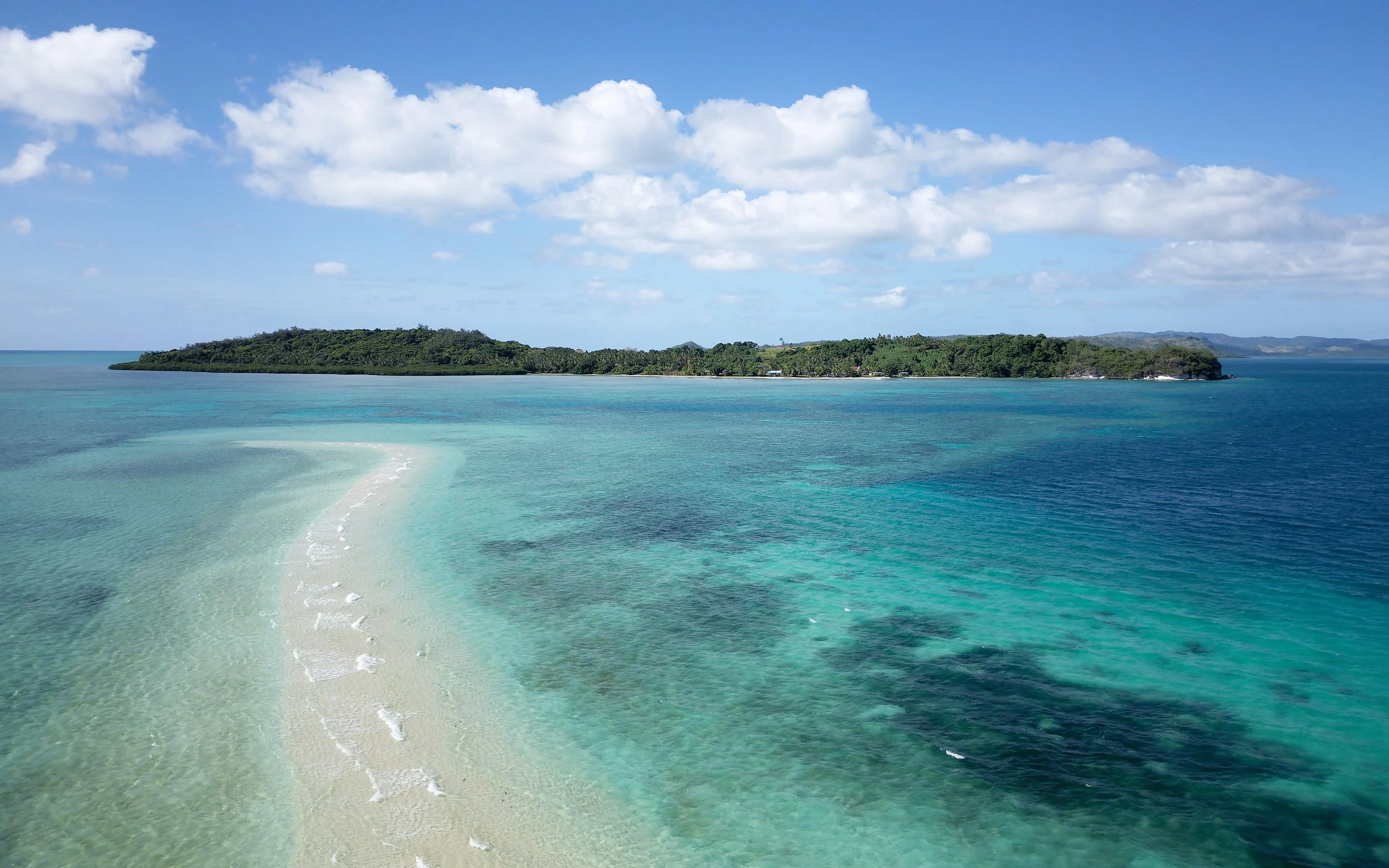
Community-managed marine protected area, Kavewa island, Fiji. ©Tom Broadhurst/WWF-Australia
“It’s’ windy today. The crossing could be a bit rough,” says my colleague Margaret, handing me a lifejacket as we board a small fibreglass boat in Fiji’s Macuata province. I’m travelling with the WWF-Fiji team and representatives of five communities involved in an innovative venture to transform the management of marine eocsystems and protect Fiji’s Great Sea Reef—known locally as Cakaulevu—the world’s third-longest barrier reef system.
We’re visiting Kavewa Island, a tropical paradise off Vanua Levu and the site of a sea‑cucumber ranching initiative that forms part of an ambitious community-owned business, Siga Damu Inc. The enterprise links marine stewardship to community wellbeing and climate resilience. While sustainable resource management is not new in Fiji, Siga Damu is unique: Indigenous iTaukei communities are shareholders in a regenerative aquaculture business, working with partners including government, WWF and investment company Matanataki to leverage international investment. Following feasibility studies and field trials, Siga Damu aims to produce and process sea cucumbers (sandfish) and connect sustainably sourced products to domestic and export markets. Siga Damu’s cooperative model keeps more value within communities and reduces pressure on their qoli qoli (traditional fishing grounds), allowing the reef to recover.
My visit to Macuata was part of monitoring for WWF-Pacific’s Nature-Positive Business for Climate Critical Ecosystems project, supported by Climate Resilient by Nature (CRxN). After meetings with partners, local government and WWF colleagues, the visit highlight was the trip to Kavewa to meet community leaders, fishers and women’s cooperative members—and to witness first-hand the diverse marine ecosystems they are working to conserve.
Communities deeply connected to the reef
Small boats are the only way to reach Kavewa. We bounce across the waves for 40 minutes, carrying fuel, kava and supplies for the island’s 124 residents. On arrival, village leaders welcome us with a traditional sevu sevu ceremony, followed by a seafood lunch prepared by the Cagimaiwai women’s group, who sustainably harvest and sell sea grapes, fish and other products.
Traditional communities here have long understood that their culture and livelihoods depend on a healthy reef.
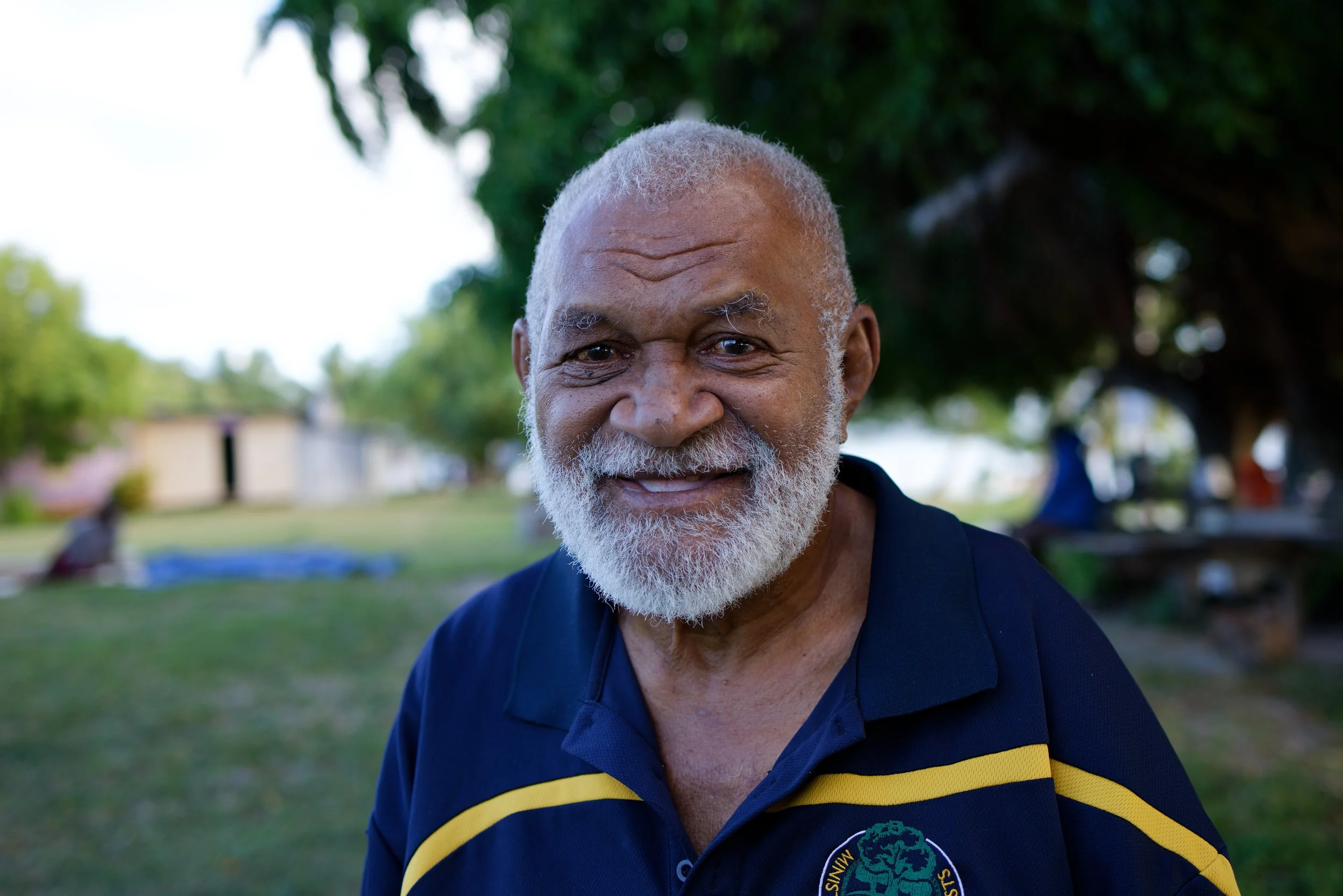
“Conservation is so important to this village because it's a small island and we rely heavily on our fishing ground… It's our source of income, source of our livelihood.” — Emosi Time, Kavewa Islander
Kavewa sits within a locally designated marine protected area spanning 134,900 hectares. Yet in recent years, their qoli qoli has come under increasing pressure from overfishing, climate change and economic exploitation.
“Our challenges are mainly in overfishing and climate change… We can see a decline in the sea stock, fish numbers.” — Emosi Time
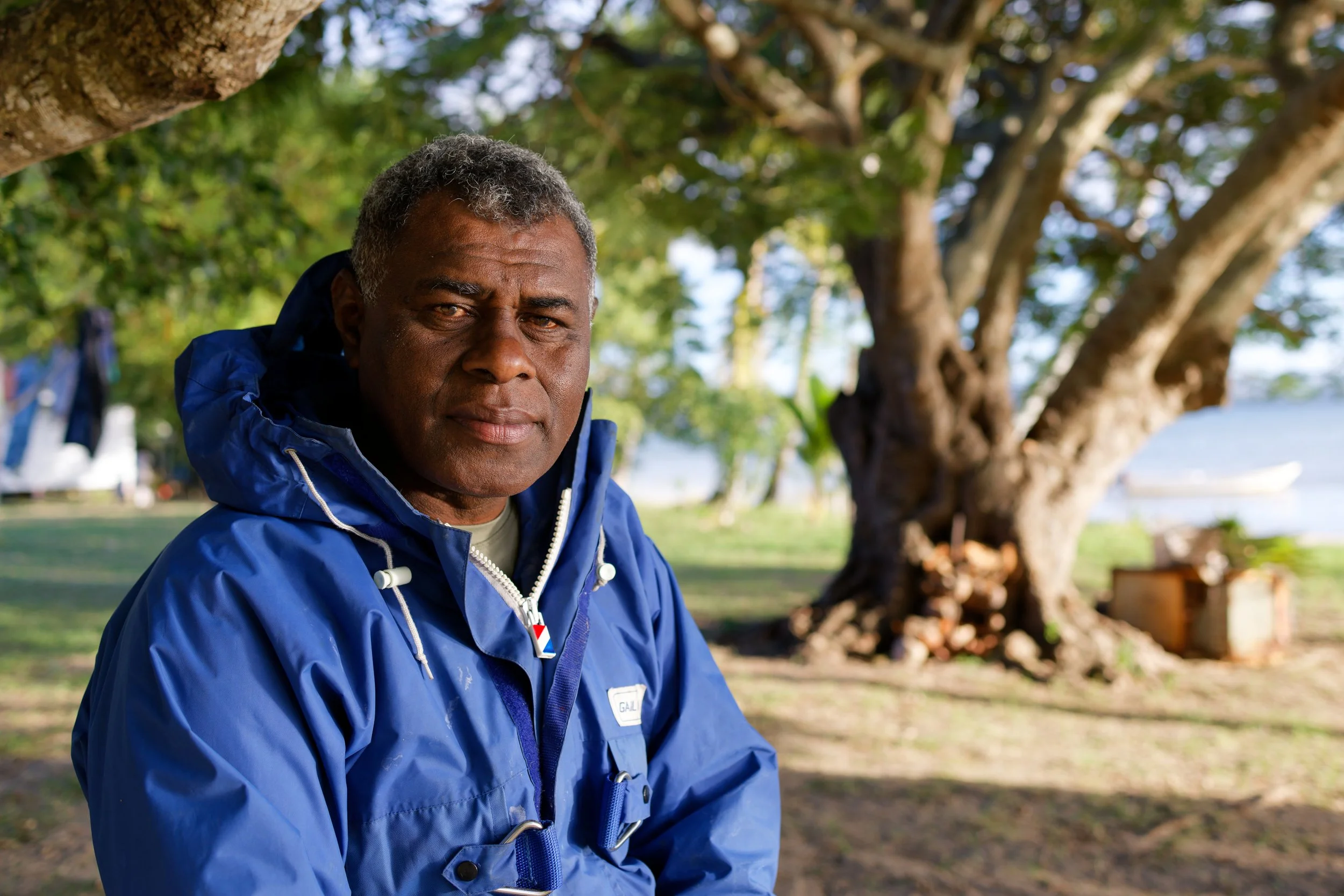
Kavewa Island resident Emosi Time. © Tom Broadhurst/WWF-Australia
A lucrative unregulated market for sea cucumbers has also emerged, with intermediaries encouraging wild harvesting. Stocks declined so sharply that the government imposed a ban on wild sea‑cucumber harvesting.
“People collect sea cucumbers to sell to Chinese exporters. And we can see there are less in the wild.” — Emosi Time
To secure the long-term health of the reef and their traditional customs, communities sought ways to reduce exploitation while strengthening livelihoods. Over several years, with support from WWF and Matanataki, a vision of collaborative, community-led marine protection took shape—and Siga Damu Inc. was born.
A new model of nature-positive enterprise
As a community-owned company, Siga Damu will coordinate farming, processing and marketing of sea cucumbers and other products across five participating tikinas—Dreketi, Sasa, Mali, Macuata and Nadogo—representing around 5,000 people and 47 villages. Cooperative ownership and shared logistics help communities capture more value while building a sustainable reef economy. A reliable supply of ranched sea cucumbers—grown “free-range” in pens—reduces the risks of unregulated harvesting.
Sesewa Apisai, community representative © Tom Broadhurst/WWF-Australia
“Siga Damu will be the market… There’s only one buyer. Villagers will have a reliable market for their catch. They don’t have to look for middlemen.” — Apisai Sesewa, community representative
The project aims to generate significant income over the coming decade and is securing investment to build infrastructure for large-scale production, predominantly for Asian markets where sea cucumbers are eaten as a delicacy.
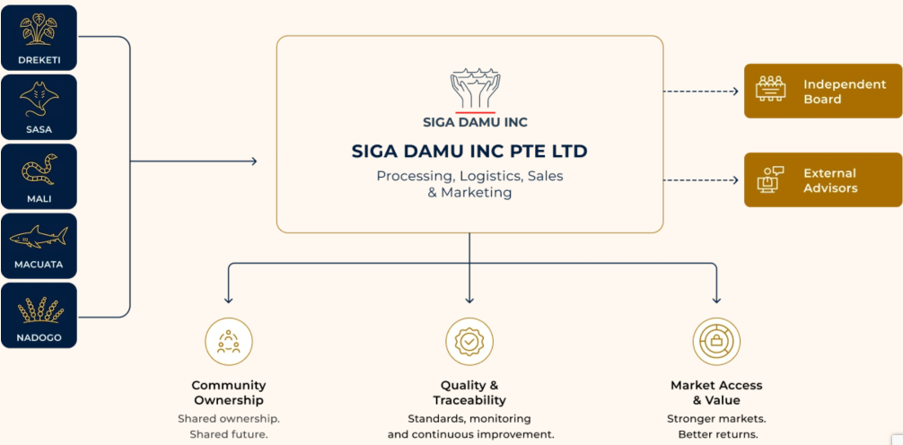
Siga Damu Inc. structure
The model promotes collaboration rather than competition, with cooperatives receiving direct payment for their produce and a share of Siga Damu’s profits.
“If we have that bonus, it is shared equally among the whole villages, so that they come together united for a common need.” — Mereadani Kato, Mali community representative
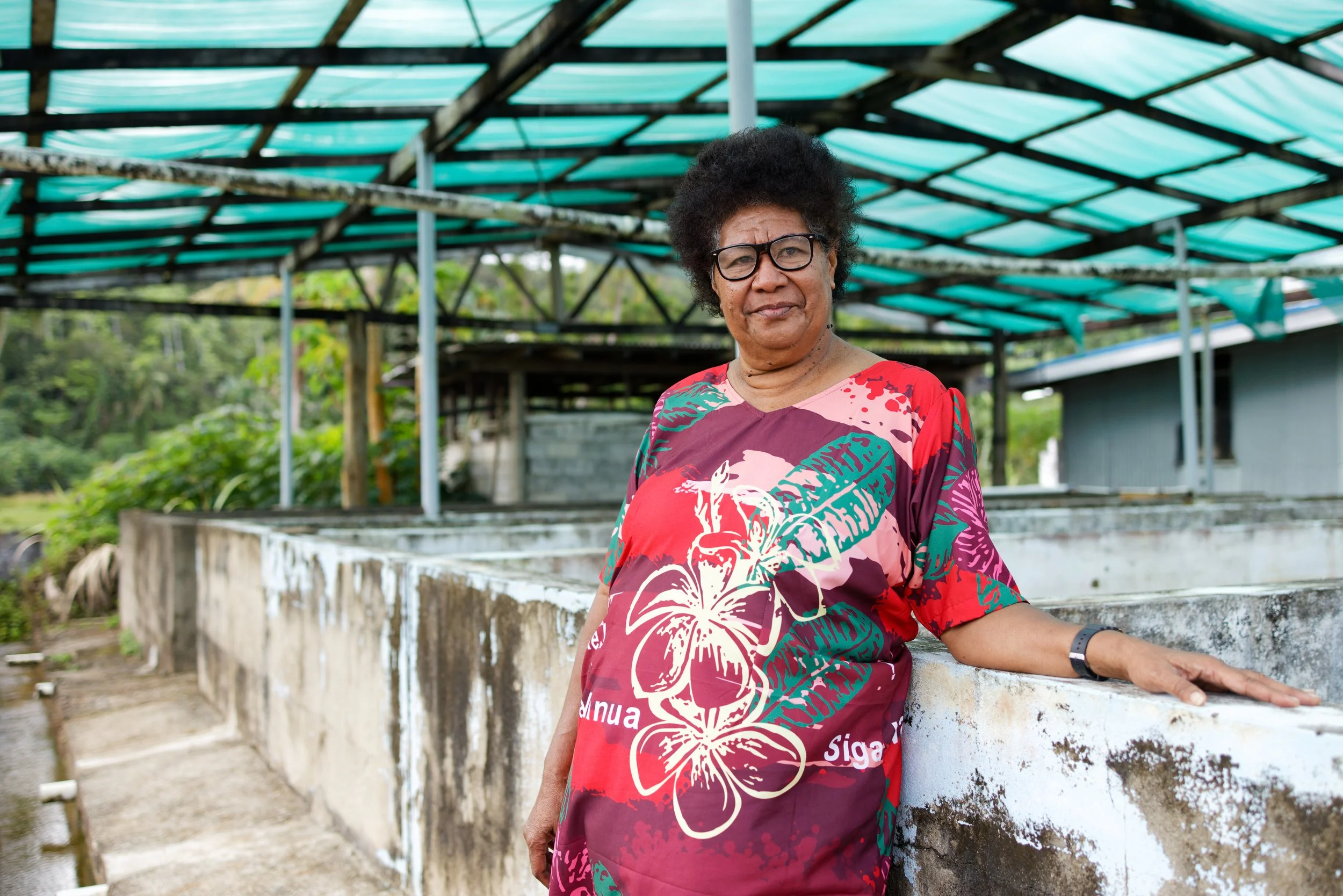
Meradani Kato, Mali community representative. ©Tom Broadhurst/WWF-Australia
Communities plan to reinvest earnings into essential infrastructure:
“A good water source, water pumps… a community hall, a school, a nursing station.” — Emosi Time
“People want to improve their homes… lights, showers, sanitation.” — Apisai Sesewa
“Not like before when people used the mangrove! Now people want proper toilets, water tanks, electricity.” — Mereadani Kato
With reduced pressure on the marine protected area, the reef can regenerate. Healthy reefs support thriving fish populations and build climate resilience, acting as natural buffers against increasingly severe storms.
“Having the sea cucumber pen will stop people overfishing… Because they've already got a guaranteed income.” — Emosi Time
During our visit, baby reef sharks sauntered in the shallows around neighbouring Katawaqa Island—an encouraging sign of ecosystem recovery.
“We can see so many species like sharks, rays, fish. And turtle numbers going up. Reef sharks are growing here and being born here. There'll be more fish everywhere. So the MPA works” — Emosi Time
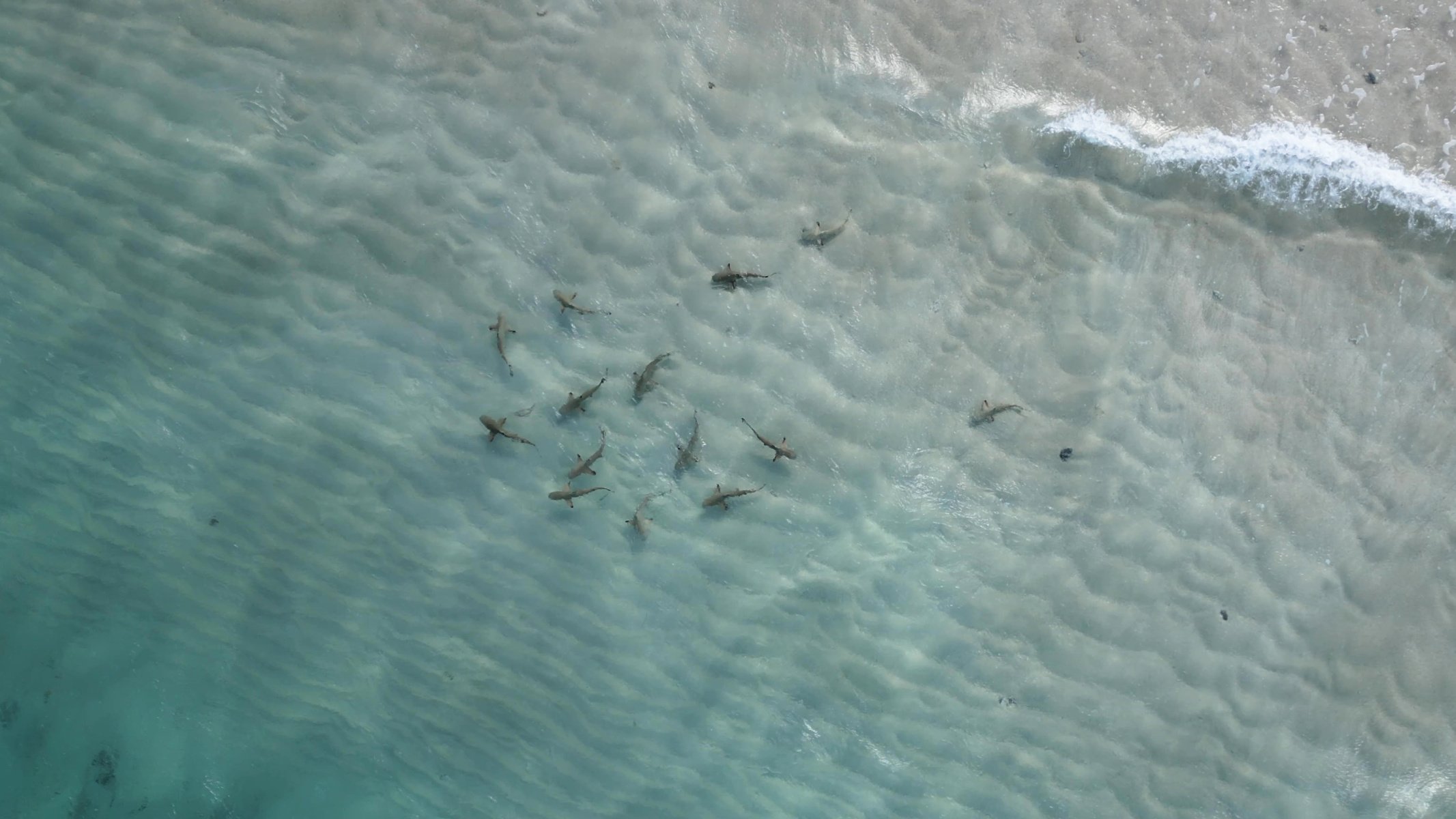
Baby sharks in the shallows, a sign of a healthy ecosystem at Katawaqa Island, Fiji. © Tom Broadhurst/WWF-Australia
Partnerships and patience
Like my journey from Australia to Kavewa, the path to establishing Siga Damu has been long. Considerable time and resources have gone into community engagement, technical trials and business model development.
Partnerships have been pivotal. With initial support from the New Zealand and Australian governments (via CRxN), Siga Damu was designed as an investment-ready, community-owned business. WWF-Fiji strengthened fisheries and mangrove management plans and locally managed marine protected areas. Matanataki co-developed the business model, undertook technical trials and continues to provide support. Government and legal experts helped establish the regulatory frameworks required for this new enterprise model.
This groundwork—and catalytic donor funding—creates a strong platform for future success.
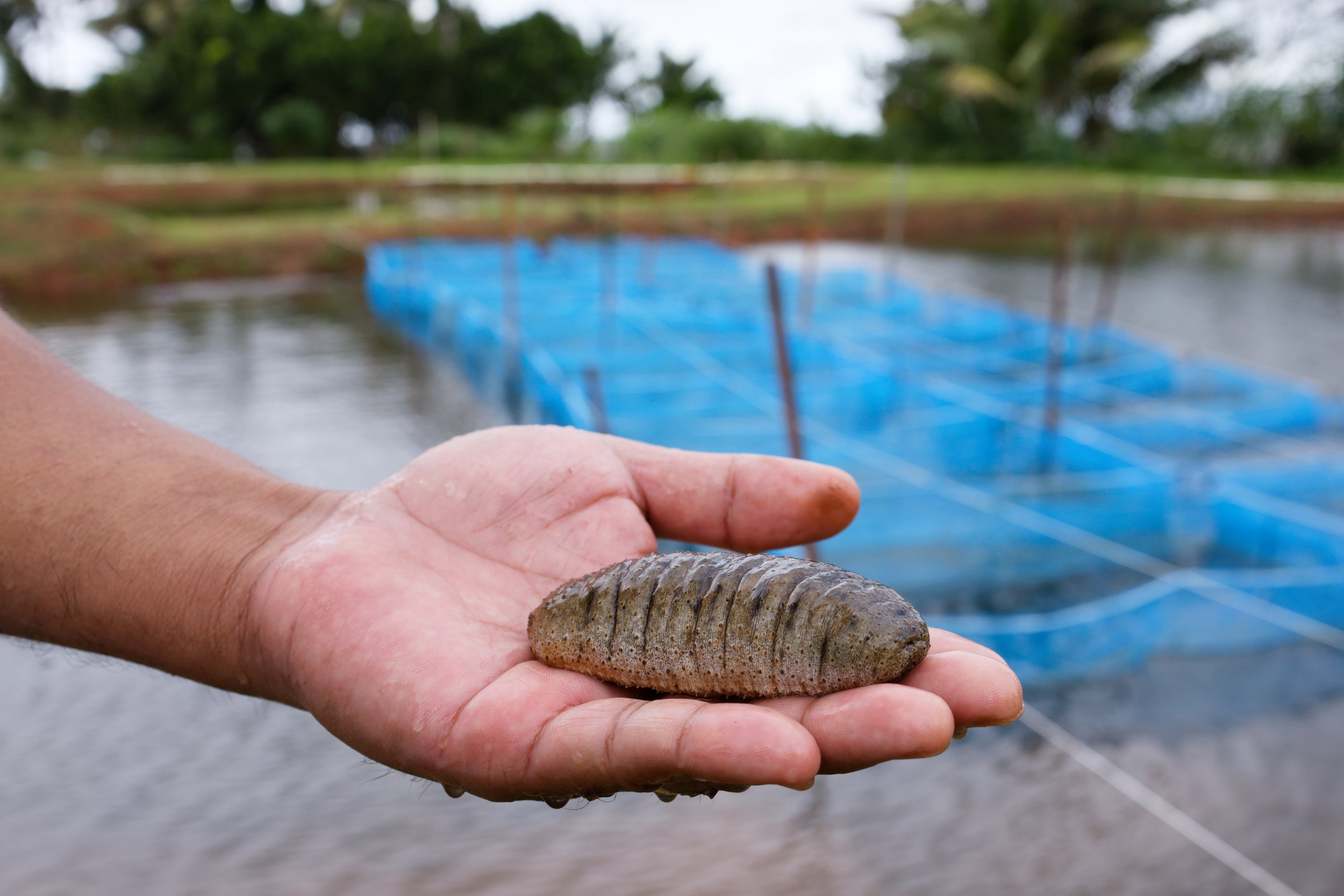
Sea cucumber at Galoa Hatchery, Fiji. © Tom Broadhurst/WWF-Australia
The next steps include finalising infrastructure, such as a proposed hatchery in Macuata province, enabling the cooperative to produce and market its first ranched sea cucumbers. Matanataki’s modelling shows Siga Damu could be profitable within three years.
“We need a (sea cucumber) hatchery closer to the environment, drinking the same sea water. In that place we could teach the people too. And we need transport like fibre-boats, trucks. Finding a place, a building, is a future plan for Siga Damu.” — Mereadani Kato
Challenges remain. Not least maintaining momentum during the challenging initial phase and keeping the environment at Kavewa pristine whilst generating a profit. There-in lies a key conundrum for high-integrity nature-based solutions. Fortunately, Siga Damu has made a strong start – focusing on nature-positive livelihood strategies, coupling early visible outcomes with long term goals, and embedding traditional ecological knowledge, rights, tenure and authority.
“If we have sea cucumber farms, we will no longer harvest more from our qoli qoli. We can protect our reefs from overfishing.” — Emosi Time
Further blended financing is essential. Matanataki is securing capital from international investors, while WWF is leveraging additional grant resources through its 10-year Coral Reef Resilience program to strengthen marine protection, climate resilience and sustainable development in the Great Sea Reef.
A hopeful path forward
Amid global threats to biodiversity and human prosperity, pockets of hope remain. The communities behind Siga Damu are leading the way.
I contemplate this as we travel back from Kavewa. The setting sun provides a spectacular backdrop as our pilot safely steers us from the choppy waters of the open sea into the relative calm of the mangroves. This seems an apt analogy – mangroves provide a sanctuary for many marine species and protect fragile coastal communities from storms. Siga Damu is aiming to do the same – supporting communities to thrive and the reef to flourish in the face of turbulent headwinds.
There is still a long way to go, but the foundations for success are in place. In Fijian, Siga Damu roughly translates as “it’s never too late”— a fitting rallying cry for climate action.
Turtle beach, Katawaqa island, Fiji. © Tom Broadhurst/WWF-Australia
Read more