Towards nature-positive livelihoods
The Climate Resilient by Nature (CRxN) Knowledge Hub aims to support learning to help make nature-based solutions work for people and nature across the Indo-Pacific. Tom Broadhurst, CRxN Program Manager, shares key reflections and takeaways from our most recent learning area, nature-positive livelihoods.
Standing in the feisty afternoon sun, at the back of Mrs Phetoudone’s farmstead in rural Laos, I contemplate the ducks waddling and foraging in their enclosure. I’m on a monitoring visit to Donphapheng village to learn how a nature-based solutions (NbS) project supported by Climate Resilient by Nature (CRxN) aims to restore fisheries, riverbanks and forests, support community development and ultimately increase resilience to climatic shocks and strains.
People here depend on the Mekong river for their livelihoods and it is closely interwoven into local culture and ways of life. Climate change—which is making the river ‘lower and slower’ most of the time, punctuated by periods of heavy rain and flooding—along with unsustainable fishing practices and natural resource management are putting pressure on fragile ecosystems and the people that depend on them.
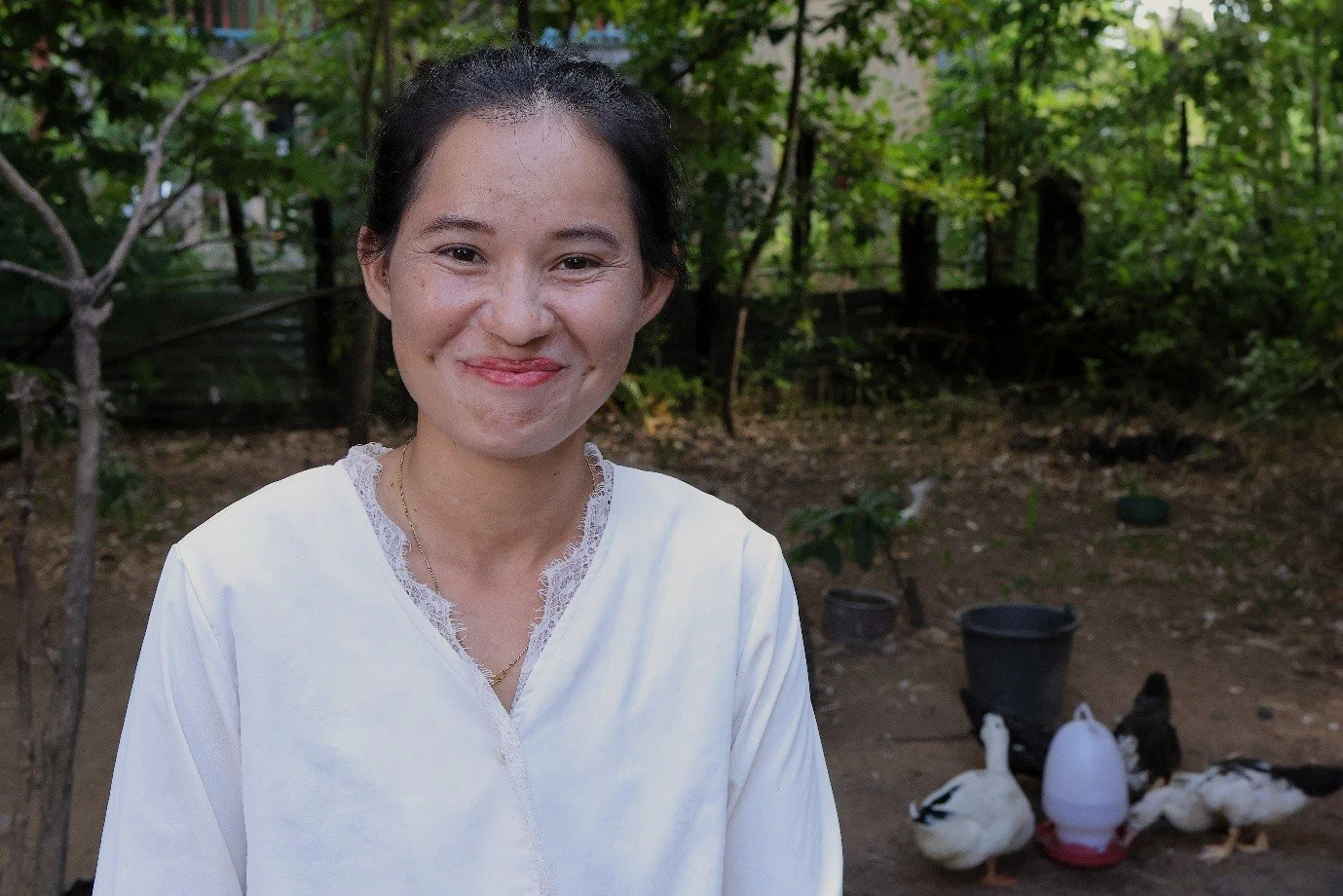
Mrs Phetoudone and her ducks, Donphapheng village, Laos. © WWF-Australia/Thomas Broadhurst
WWF-Laos has been working with climate-vulnerable communities in the Siphandone Riverscape (Champasak Province) for several years to promote sustainable fisheries, habitat restoration and alternative livelihoods—delivered through co-managed fish conservation zones, revegetation of riverbank and forests, and Village Development Fund (VDF) micro-loans that aim to diversify incomes.
Like all good nature-based solutions, the project targets positive outcomes for people, nature and the climate. Ultimately, we want projects like this to be nature-positive, leading to a net-gain for biodiversity and ecosystems. But I am stuck contemplating the ducks. ‘Is raising poultry really nature-positive?’ I ask myself. It’s a question that stimulates some internal wrangling and ultimately leads to the creation of a CRxN learning inquiry into nature-positive livelihoods.
For those wanting the concise version of this article, the short answer is ‘it depends.’ Considering poultry farming as a distinct livelihoods activity ‘in and of itself’ isn’t obviously nature-positive. However, if poultry farming is one part of a multifaceted, inclusive, locally-driven livelihoods strategy that helps people to meet their needs and fulfill their aspirations whilst contributing to healthier ecosystems, then it can be!
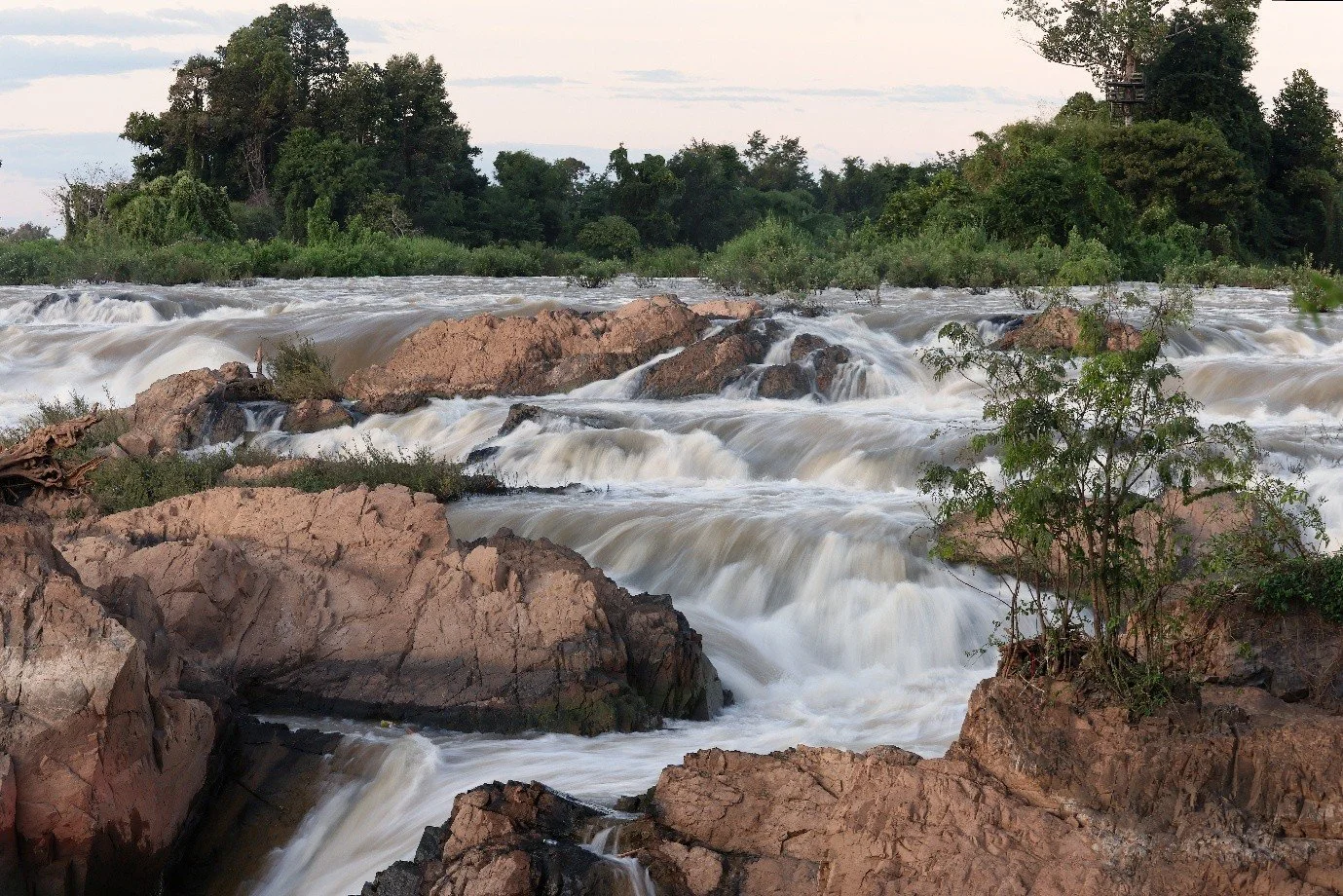
Siphandone riverscape © WWF-Australia/Thomas Broadhurst
Learning program
We partnered with Woodhill Solutions to explore this further. The aim was to identify good practices for nature-positive livelihoods in NbS; propose some essential characteristics and criteria for nature-positive livelihoods; and produce guidelines to help practitioners understand how to manage trade-offs between nature, climate and people in nature-based solutions.
Following a program of desktop research and interviews with CRxN partners and other NbS stakeholders, the Woodhill team produced this report 👇🏽
CRxN shows that NbS can support livelihoods in diverse ways. This includes for example activities that directly contribute to ecosystem regeneration, that relieve pressure on fragile ecosystems by providing alternatives, that build resilience through livelihoods diversification, and/or which encourage local governance of natural resources. Yet embedding livelihoods as part of nature-based solutions involves real trade-offs—spatially, temporally and between conservation, climate, cultural and socio-economic priorities.
Nature-positive livelihoods matrix
The centrepiece of the research is a nature-positive livelihoods matrix. It draws on sustainable livelihoods and capabilities approaches, recognising that people pursue livelihoods strategies—combinations of assets, activities and relationships—to meet their needs and fulfill their aspirations, in the context of institutional arrangements (laws, markets, norms and power structures) that may help (or hinder) people to achieve these goals.
However, not everyone in a particular location will benefit equally. NbS are implemented in complex landscapes shaped by long histories of environmental degradation, poverty and social exclusion. Inequalities within communities affect who benefits and who bears risk. Hence a consideration of marginalisation, discrimination and unequal access is fundamental for NbS.
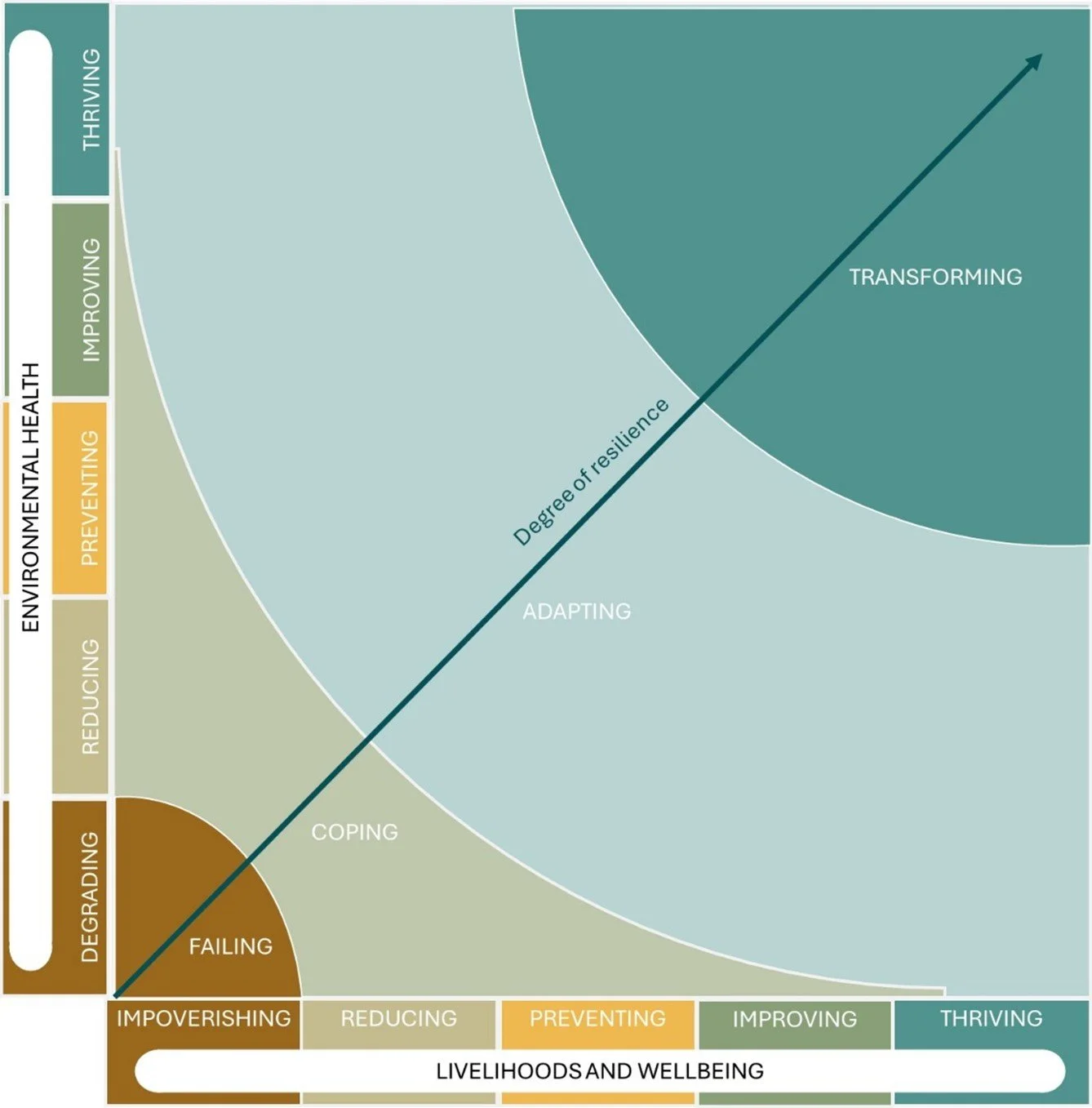
Nature-positive Livelihoods Matrix, a tool for understanding livelihoods and environmental outcomes in NbS
The matrix integrates sustainable livelihoods thinking with ecosystem restoration, recognising that environmental recovery occurs along a continuum—from reducing harm to enabling ecosystems to thrive—and that livelihoods outcomes range from impoverishment to long-term flourishing.
NbS operate across landscapes shaped by competing interests, unequal power relations and different time horizons. The matrix recognises trade-offs between nature and livelihoods, across local and landscape scales and between immediate needs and long-term resilience. Making these trade-offs visible is essential to informed decision making.
By combining environmental and livelihoods outcomes into a single matrix, it provides a decision-making tool for navigating complexity. It helps practitioners and policymakers identify what is happening and what is possible within a given context, assess pathways from coping to adaptation and transformation, and design NbS that prioritise people’s livelihoods while enabling nature to recover and thrive.
The research concludes that livelihoods should be the starting point for nature-based solutions and that nature-positive outcomes are attainable but not automatic. They have to be carefully planned and shepherded as part of comprehensive, context-specific, inclusive, equitable and long-term NbS strategies.
My tips for nature-positive livelihoods within NbS:
Know your place it’s people, power dynamics, culture, history, environment.
Think systemically take time to understand the interconnections and interdependencies between human and natural systems.
Recognise that livelihoods are more than income generating activities. Consider livelihoods strategies and outcomes that help people to meet their needs and aspirations, overcome barriers and fulfill their potential in ways that support nature to recover and thrive.
Consider the most vulnerable. Inequalities and power dynamics within and between communities affect who benefits and who bears risk. Participatory and inclusive approaches aim to support the most marginalised, including those most vulnerable to a changing climate. Indigenous people and local communities must be involved in NbS planning, implementation and monitoring. Stay tuned for our upcoming learning program on Traditional Ecological Knowledge (TEK) that will offer insights to further strenghten your approaches.
Take a positive approach.Think assets and opportunities, not problems and issues. Build on what people have, not what they lack. It is more respectful and empowering.
Put your (duck?) eggs in more than one basket. Reliance on a single ‘solution’ is risky. Diverse systems are resilient systems. A coherent nature-positive livelihoods strategy should consider multiple approaches to delivering outcomes for people and nature, ensuring that if one options fails there are safety nets.
Build climate resilience. Circumstances change, even more so under a changing climate. Build resilience into your plans; recognise and respond to vulnerabilities and risk; develop contingencies and adapt, now and in the future.
Play the long game. Transformative NbS require long term commitment, adequate resourcing and strong institutional capacity. Ecological outcomes in particular take time to mature. Short-term interventions may harm or hinder relationships, raise expectations and fail to fulfill their potential. Think beyond the donor or project timeline.
Use the nature-positive livelihoods matrix. Plot where things are at right now with respect to livelihoods and environment in your target location and where things aspire to be in future. Then work out how to get there, including the trade-offs and compromises needed, the institutional support and resources required and who should be involved and how. Start with communities and their differentiated assets, capabilities, vulnerabilities, hopes and dreams – as outlined above.
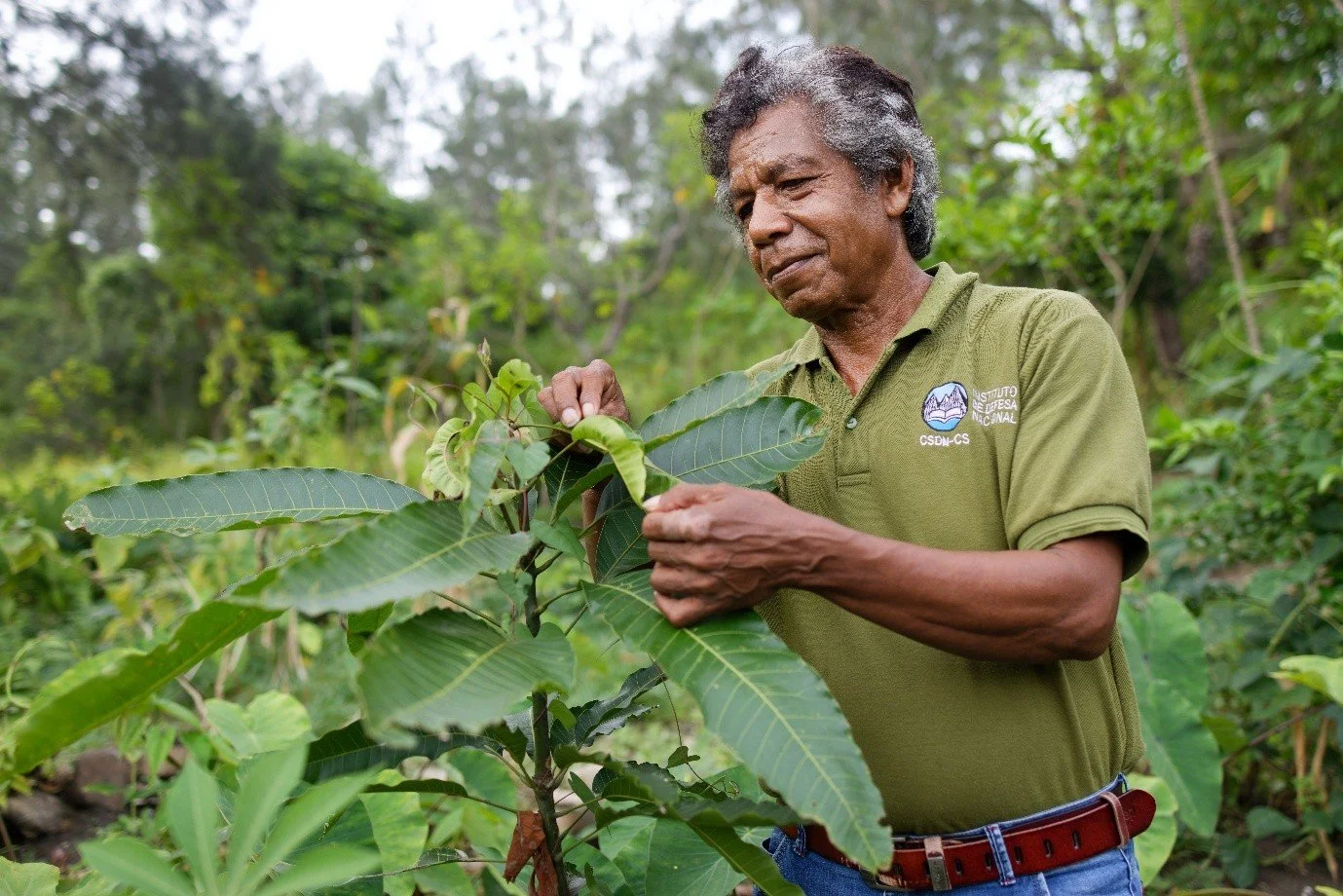
Maun Aquilo checks crops on his agroforestry plot, Uaguia village, Timor-Leste. CRxN partners CRS and Caritas are supporting farmers to adopt agro-forestry in rural areas, contributing to improving farmers incomes and food security, increasing resilience to floods and landslides by stabilising slopes, and regenerating degraded landscapes © WWF-Australia/Thomas Broadhurst
Back on Mrs Phetoudone’s farmstead, she tells me how the CRxN project has supported her. She borrowed funds from the VDF to raise ducks – starting with four females and one male. Love blossomed; she now has 30. The males are used for food or sold, whilst the females are kept for eggs. With further VDF support, she is branching out into chickens, pigs and vegetables too. After paying back the loans, Mrs Phetoudone uses any profits for family support, including school fees, savings, emergencies, children’s pocket money. As part of the VDF management committee she has an increasing role in local decision making and life for her family and community is improving.
Overall the project is demonstrating positive results for nature too – fish catch monitoring and eDNA sampling is showing gradual improvements in fish quantity and diversity, as communities themselves proactively manage fish conservation zones, and pursue other livelihoods that reduce pressure on the river and enable fish stocks to recover. In this context the duck rearing is part of the broader NbS strategy that is progressing towards improved outcomes for nature and for human wellbeing. It’s one step on the pathway to nature-positivity.
Other CRxN projects use a variety of livelihoods strategies to deliver benefits for people, nature and climate. Activities range from agroforestry and coral reef restoration to forest carbon and nature-based enterprises. Each approach is relevant to its context, and each can be plotted in a different place on the nature-positive matrix. Progressing along the nature-livelihoods continuum—towards thriving communities, thriving ecosystems and increasing climate resilience—is the next challenge and a goal to which all NbS initiatives should aspire.
Read the learning program report to get started!
Tom Broadhurst, CRxN Program Manager