Collaborating for climate resilience: Reflections from the CRxN Learning Event
Written by Tom Broadhurst, Program Manager, WWF-Australia
Anyone who thinks they’re too insignificant to make a difference has never shared a tent with a mosquito.
Question: What do you get when you bring 22 WWF staff, half a dozen government workers, some farmers, academics, community members, consultants and 20 representatives of other NGOs from across Asia-Pacific together to discuss nature-based solutions (NbS) to climate change? Answer: Learning, ideas, inspiration, stories, collaboration, friendships, fun, laughter, sweat and tears (in no particular order!).
As Climate Resilient by Nature draws to a close, the End of Program Learning event took place in Fiji in November 2025, aiming to stimulate sharing and learning amongst CRxN program implementers, celebrate our collective achievements over the past four years, and plan for the future.
Representatives of all nine active CRxN projects, together with those of us that make things happen behind the scenes, gathered for three days of facilitated discussion, ideation and action planning. Together, we sought to uncover our results and impacts, explore our issues and challenges, and identify the key ingredients for successful locally-led nature-based solutions – so that as a NbS community we can take nature-based solutions forward with strength.
The First Landing Resort in Vuda was a perfect venue for the workshop, at the start of cyclone season in this part of the Pacific. Located on the coast between an oil terminal and a mangrove, it metaphorically represents the situation society finds itself in – situated between a fossil-fuel based past and a nature-based future, and vulnerable to extreme weather. Fortunately for our workshop, the forecast was favourable!
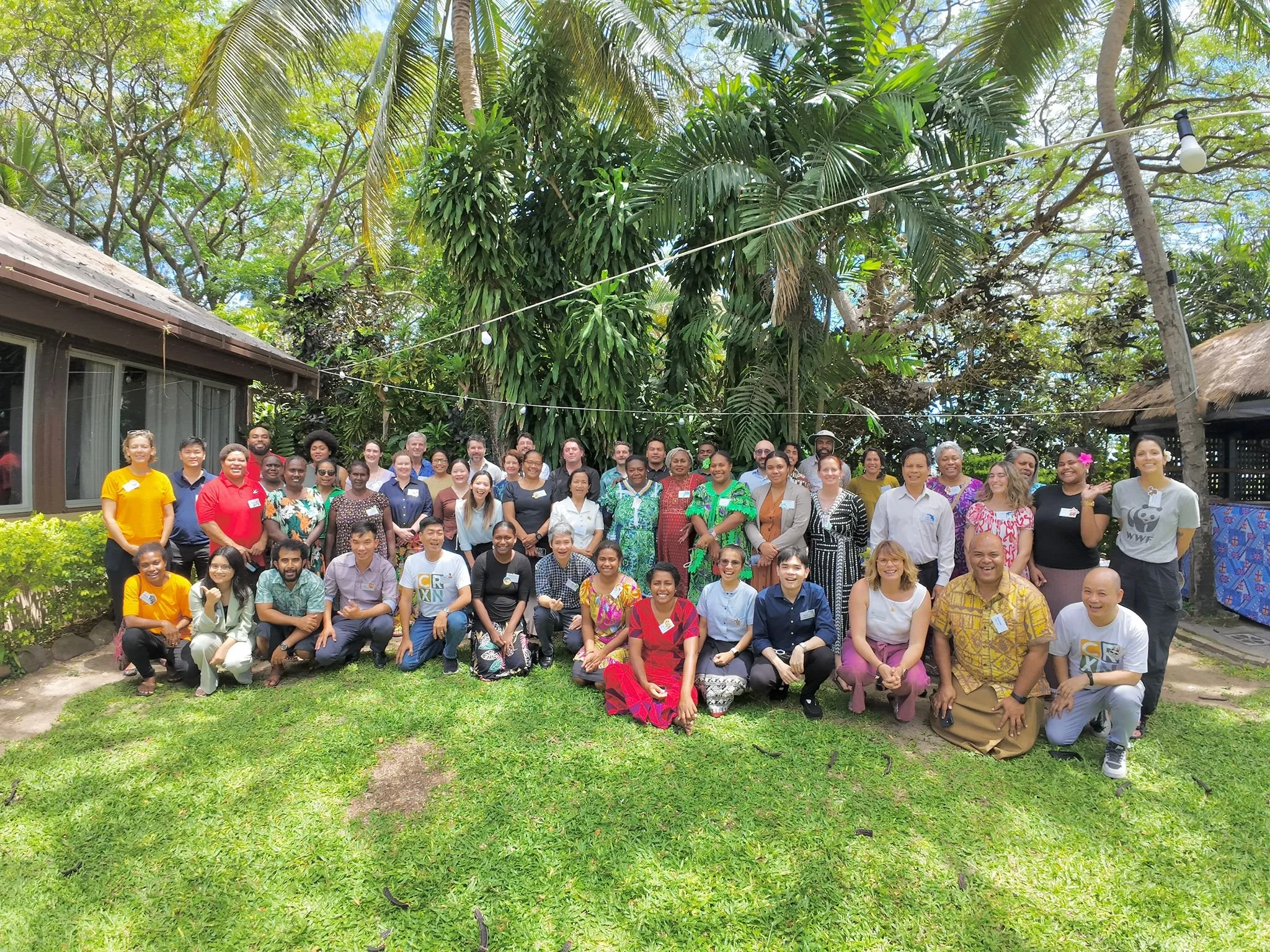
CRxN learning event partcipants ready for a week of reflection ©WWF-Pacific
Day One
The first day started with a beautiful musical welcome from our WWF-Fiji colleagues, ensuring we all felt grounded in Fijian culture and hospitality. As Program Manager for CRxN I donned my lucky shirt – a reminder of my previous work visit to Fiji where I had to reclothe after getting caught in a downpour – and attempted to set the scene for the days ahead. Reiterating that nature is our ally in addressing the triple challenges of biodiversity loss, sustainable development and climate change. And that these global challenges require local solutions – CRxN’s projects are rooted in high-integrity, community-led, inclusive approaches that respect traditional ecological knowledge.
Thereafter our excellent facilitators – Pip and Meroni – guided participants on a journey to explore each other’s projects, tease out key learnings, challenges, lessons and aspirations. Using a Design Thinking methodology to frame our activities, we started by learning about each others’ context and NbS work. Each team shared something that represented their CRxN project. We had floating rice noodles from Vietnam; community business models from Fiji; coral restoration tips from Kyeema Foundation; e-DNA sampling kits from Laos; and sea-grape cosmetics from Solomon Islands. Not to mention a photo exhibition that we had prepared to showcase all of the projects.
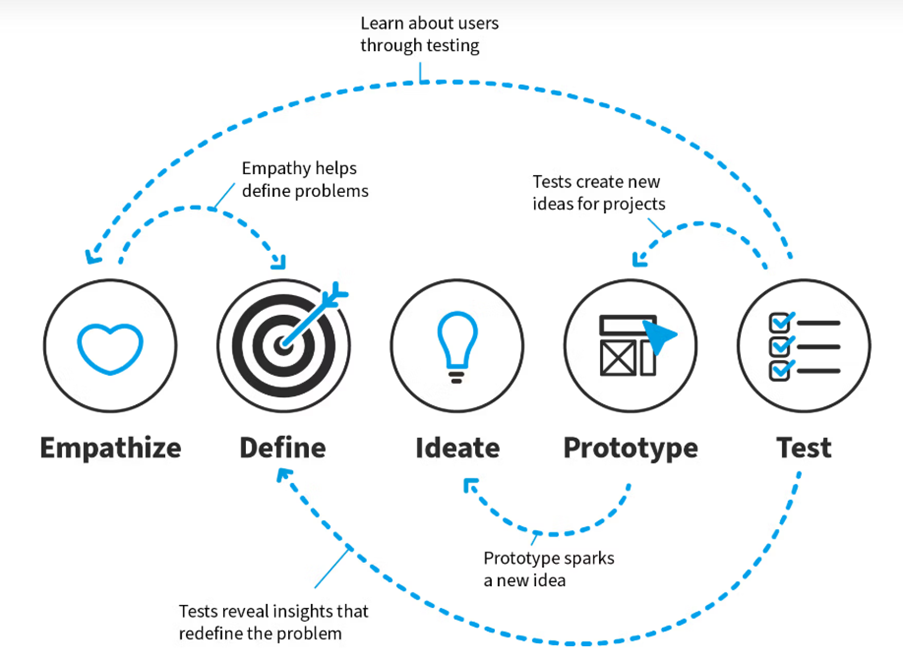
Following the Design Thinking approach (see below), we worked in groups to identify some common goals, approaches and challenges (define), before brainstorming possible solutions (ideate) that we then prioritised, developed (prototype) and collectively interrogated (test).
Groups were given animal names – reflecting our commitment to nature – which created some healthy competition, with extra kudos to those teams who acted out their animal characters. Special mention to the snakes and the monkeys here. The energy, enthusiasm and passion of the CRxN community was evident, with people from different countries and cultures genuinely collaborating with each other.
An engaging day culminated in a ‘cultural’ dinner, with several participants wearing traditional dress, or sharing stories or objects that represent their relationship with nature. In an unexpected turn of events several members of the CRxN group found themselves on stage for the venue’s cultural dance show. The Mekong team were particularly involved, and the skill-sharing continued as Mr Tinh from WWF-Viet Nam wowed everyone with a break dance!
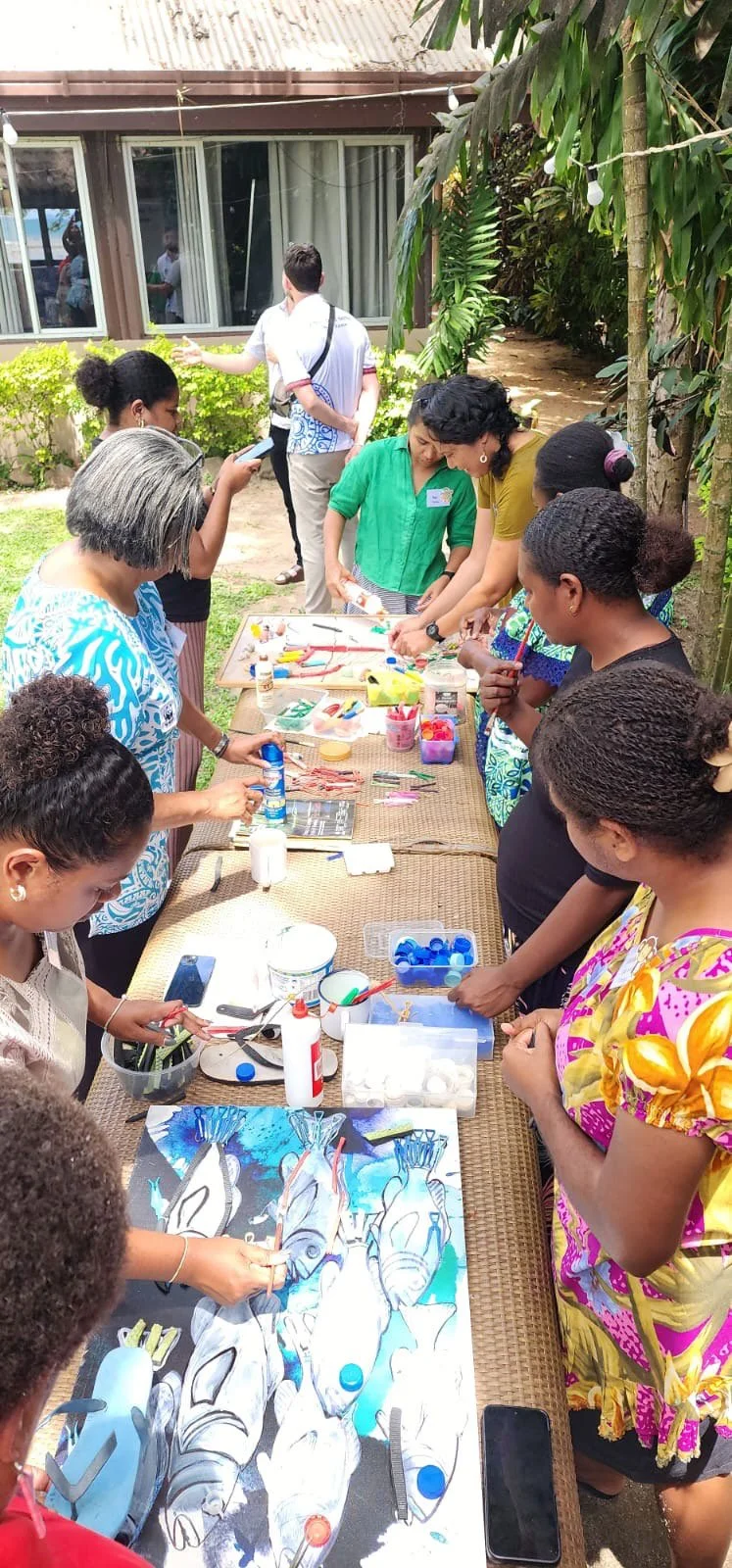
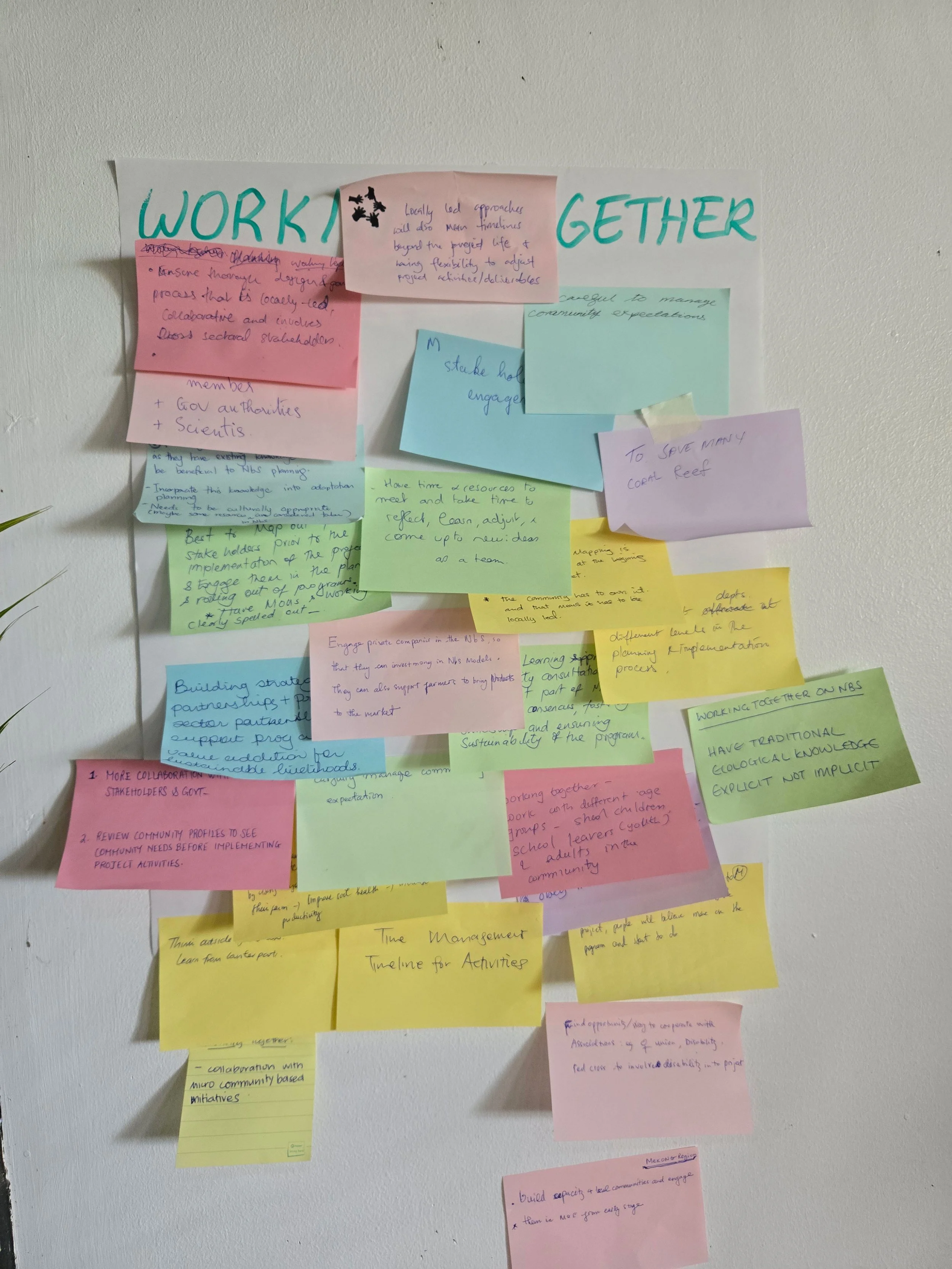
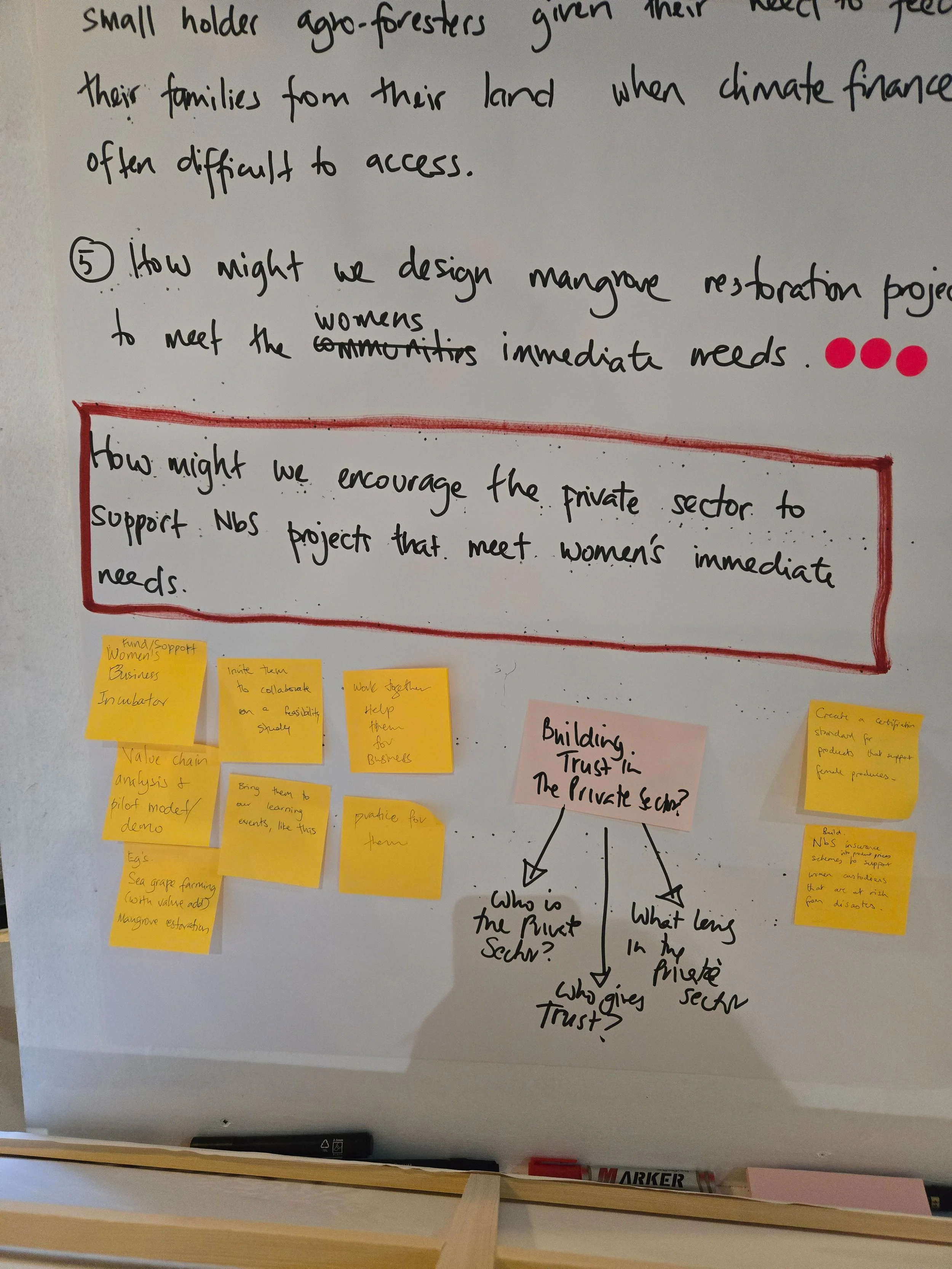
Getting creative, sharing knowledge and ideating ©WWF-Australia
Day Two
After being indoors for the first day, the second day saw us head outdoors to visit Korovou Village in Tavua in which WWF-Fiji and the local community are restoring mangroves and supporting micro-enterprises. We were welcomed with a traditional sevu sevu ceremony, sharing kava with community leaders.
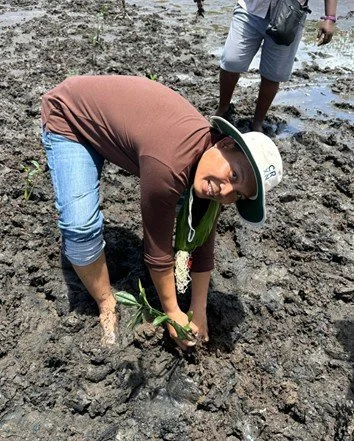
Getting our hands dirty and doing our bit, we planted 1,150 mangrove saplings between us – a rewarding way to contribute to restoring nature and support community resilience, with mangroves providing habitat for crustaceans and fish, associated economic opportunities for local people, and providing a buffer to reduce the impact of storms that are becoming more frequent and intense under a changing climate.
The community visit enabled us to experience first hand the context in which this particular NbS was taking place, including some of the challenges, opportunities and dynamics. It was a good reminder that an effective NbS should be locally relevant and beneficial, community-led, respectful of local culture and relationships, and inclusive of those most vulnerable to climate change.
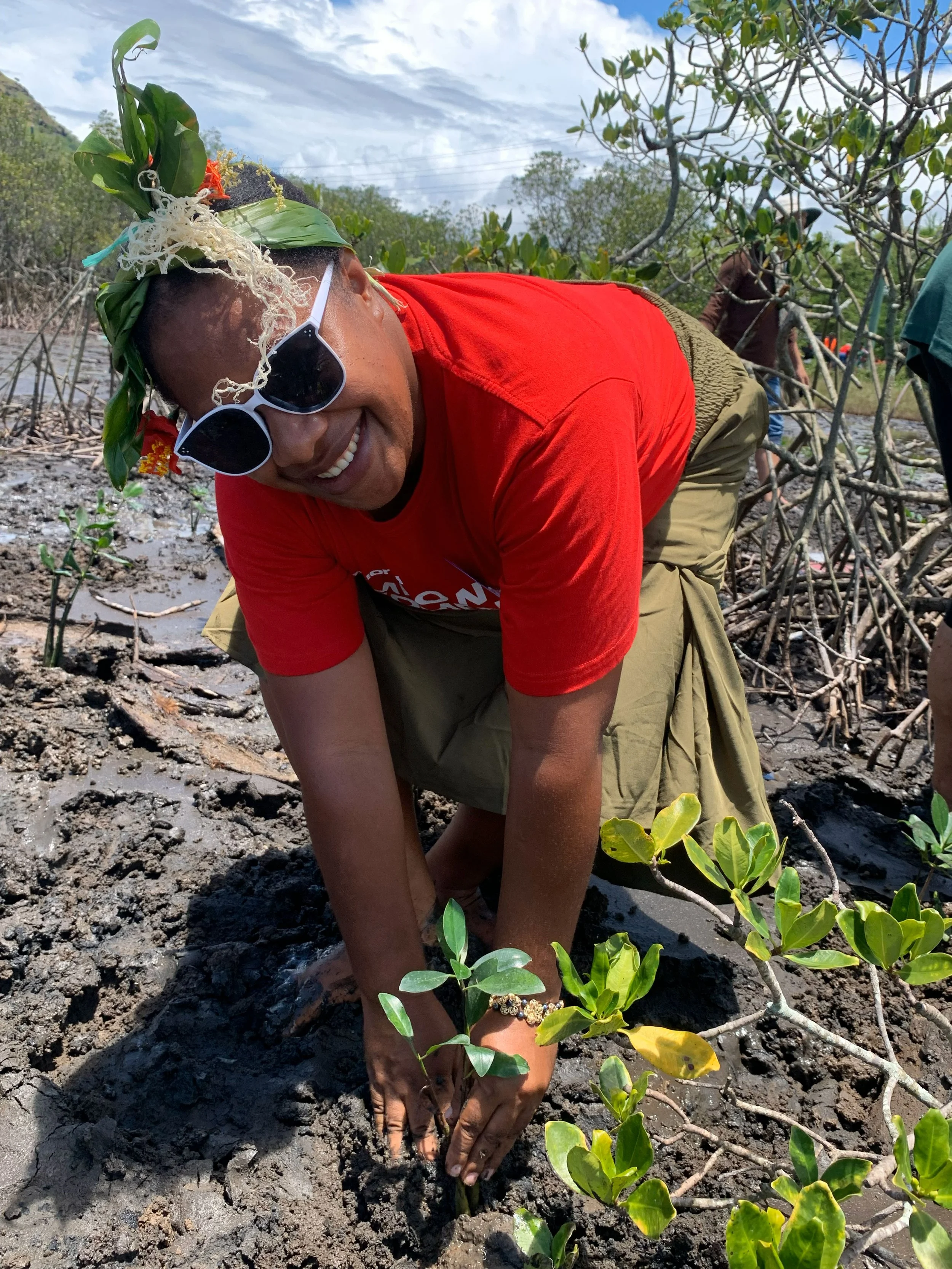
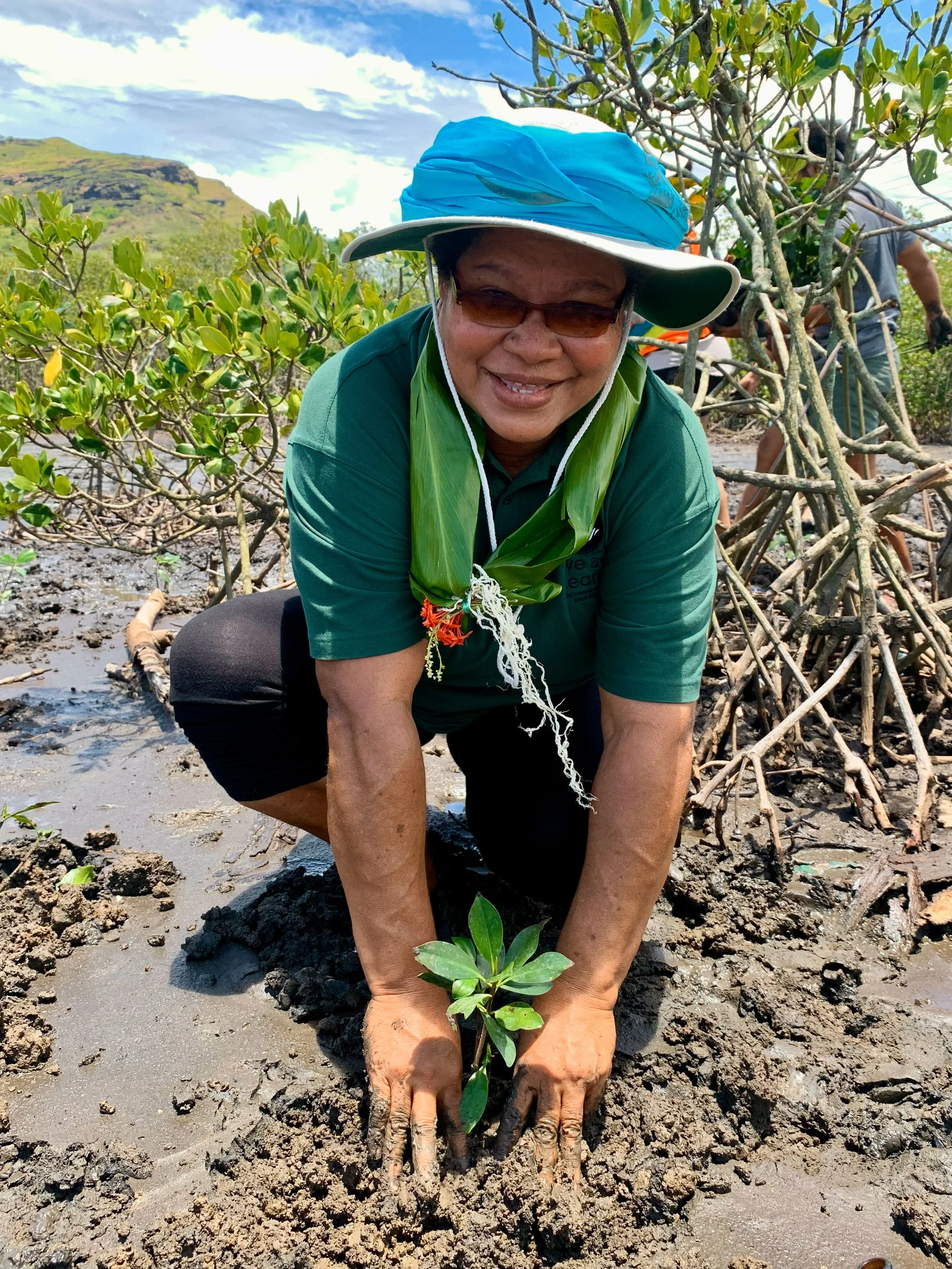
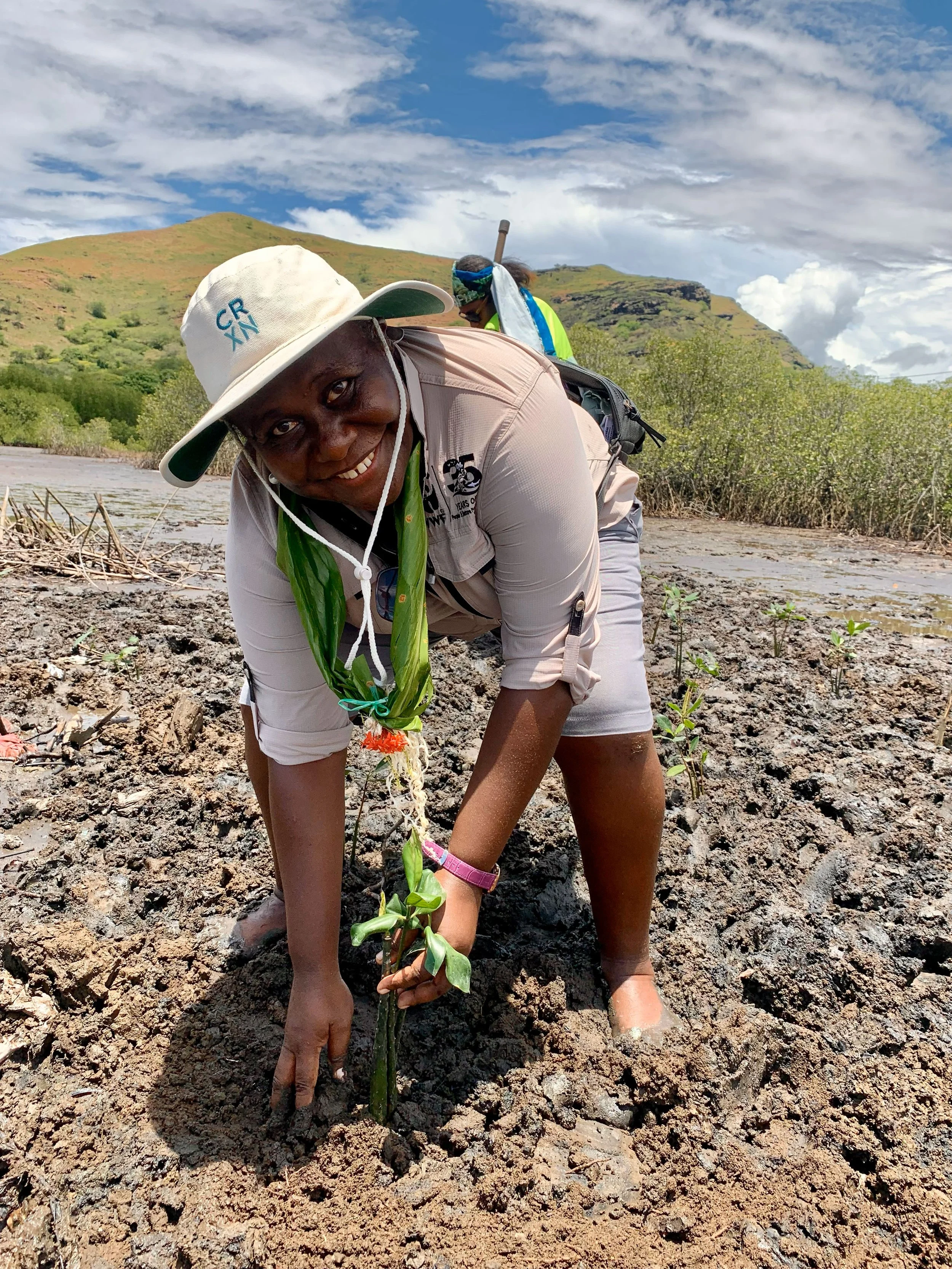
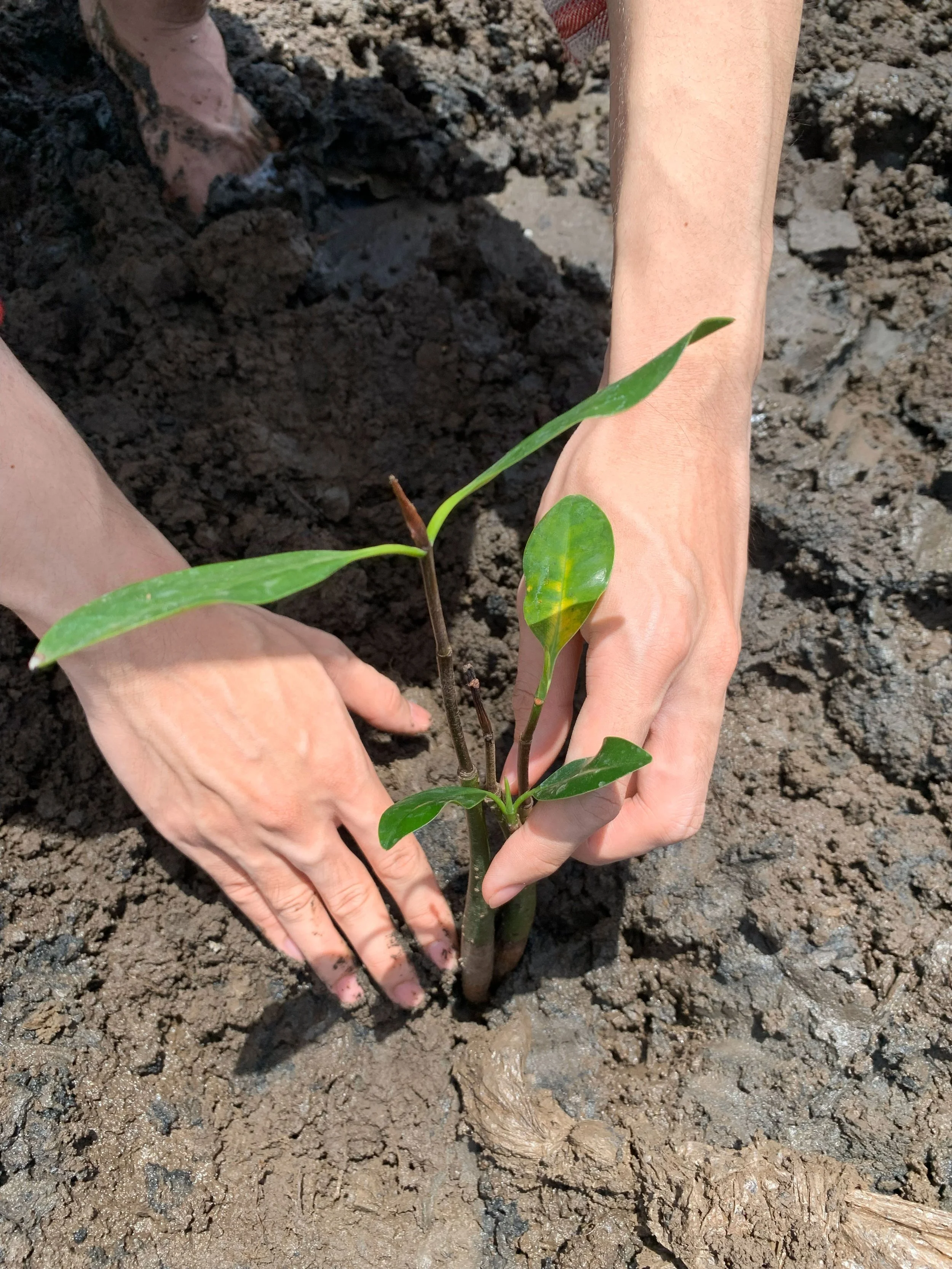
Getting their hands dirty! Mangrove planting in Tavua ©WWF-Australia
Day Three
Day Three
We were back in the meeting room for day three, reflecting on the field visit and continuing our learning by taking deep dives into CRxN’s learning programs on traditional ecological knowledge, carbon markets, blue foods, nature-positive livelihoods and Nature Suite tools (NbS Radar). Thereafter we continued with our prototyping of next-generation NbS initiatives – using crafts, models and visuals to bring them to life. Phan from Laos proved especially skilled at drawing – what hidden talents we have in the CRxN community!
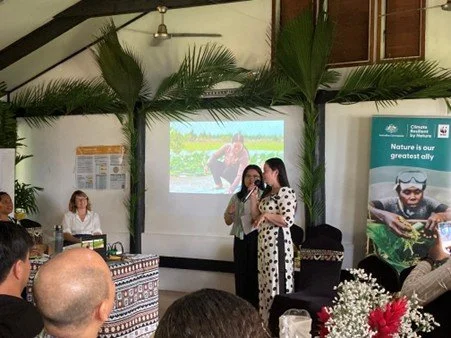
In the afternoon we were joined by several external stakeholders to showcase CRxN and following some inspiring stories from CRxN project teams from Vanuatu, Fiji and Vietnam, we invited our guest to join us to test the prototyped models. This was a bit like Dragon’s Den – with representatives from each team pitching their prototype to small groups of others, receiving feedback and refining their models. We had some great ideas for future NbS initiatives including - an NbS TV show to showcase and inspire; NbS endowment fund to provide reliable funds to kick start or expand NbS; NbS tourism projects and market-led approaches to generate sustainable funding; and NbS champions initiative to equip people with the skills, networks and motivation to drive locally-led NbS everywhere. I am excited to continue conversations to take the best ideas forward.
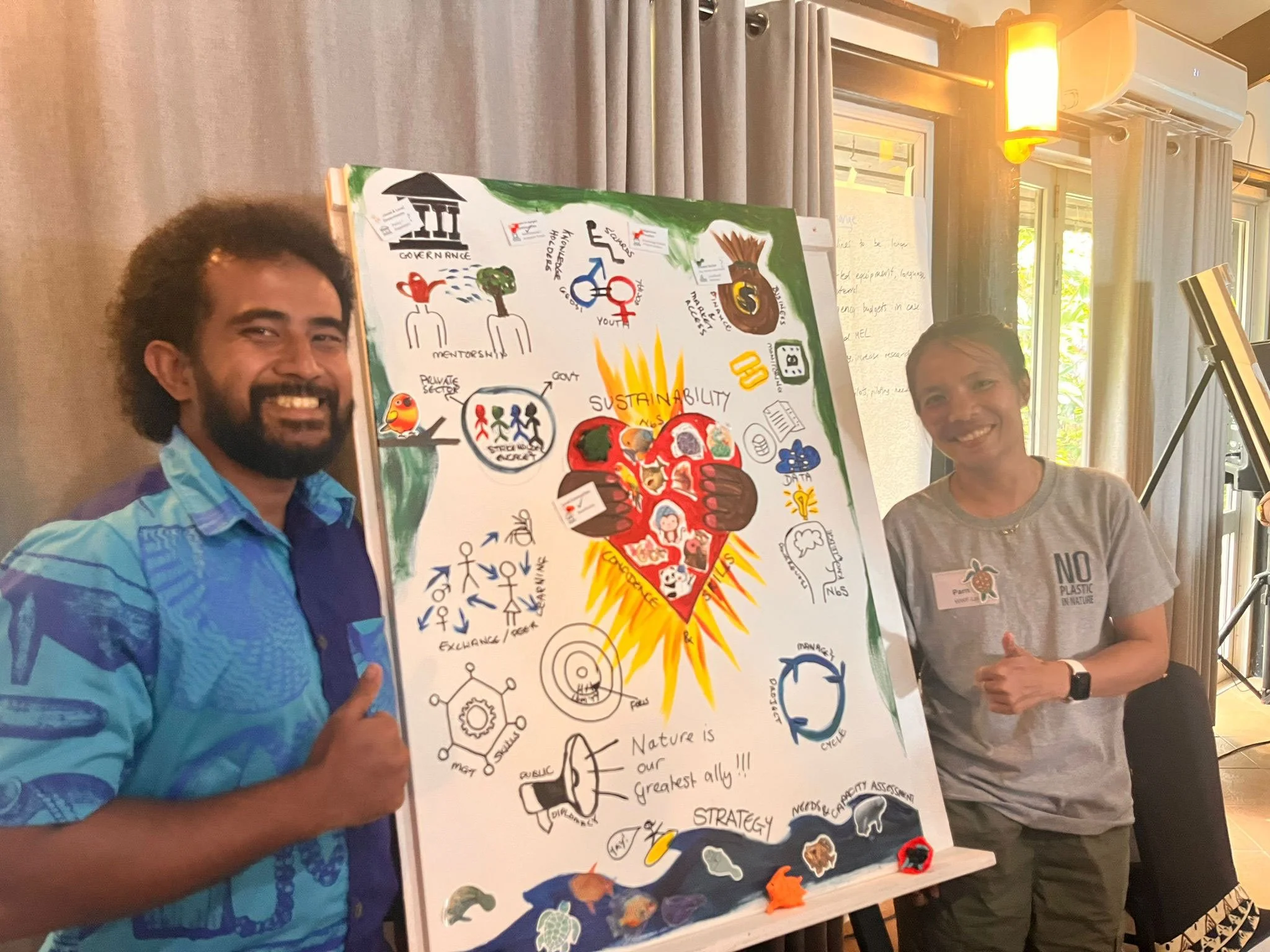
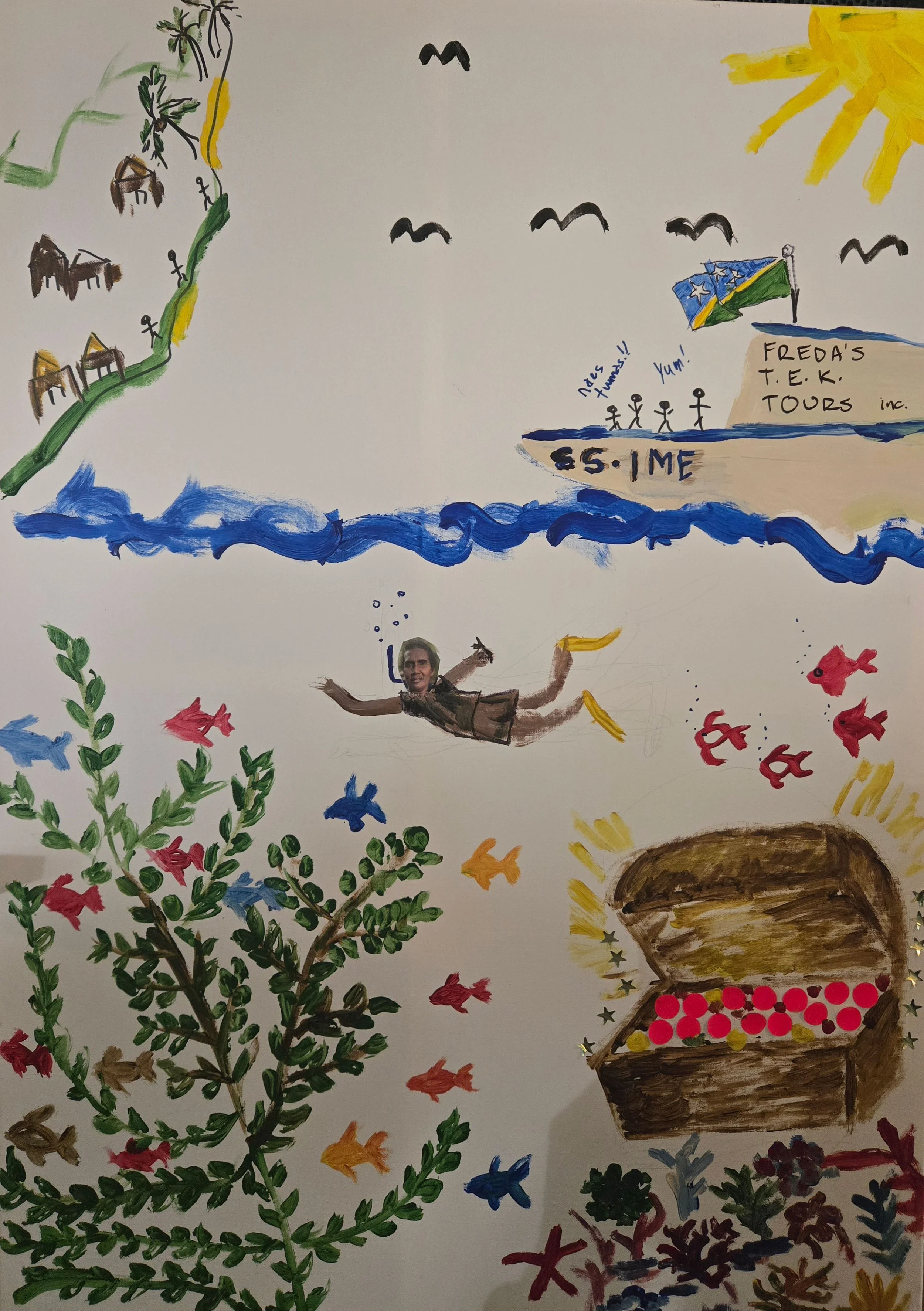
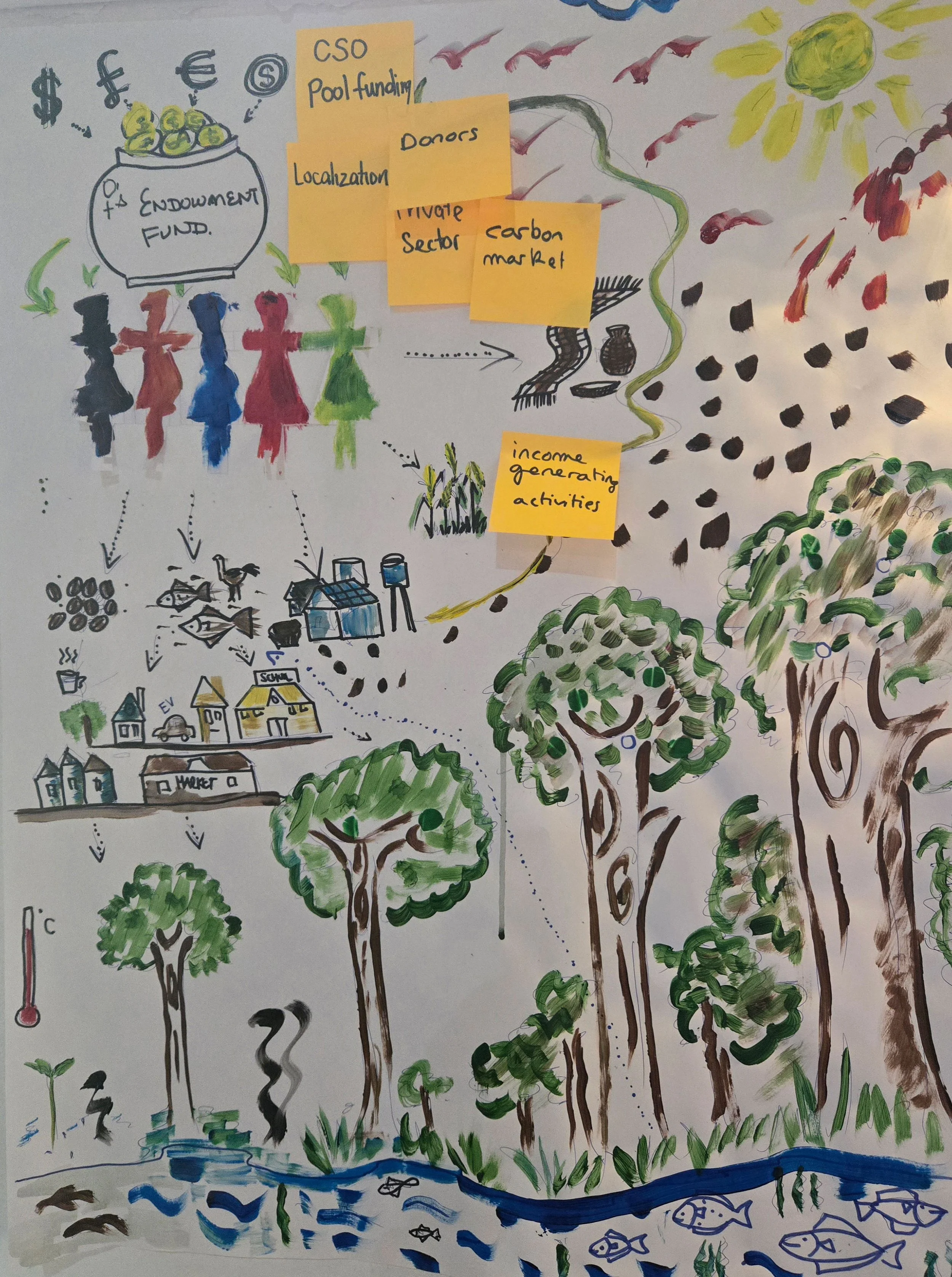
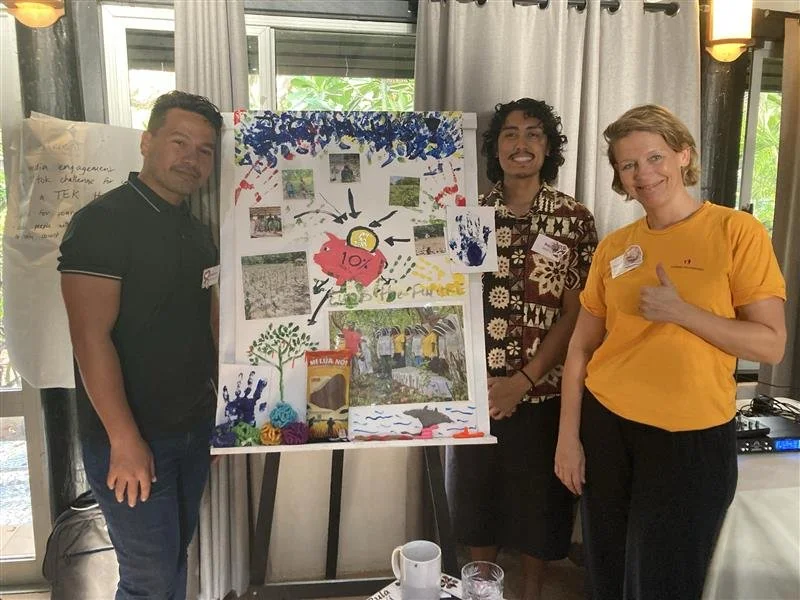
Protyping ideas to scale NbS ©WWF-Australia
Reflections
This process really drew attention to the challenges, opportunities and priorities for those of us taking nature-based solutions forward in Asia Pacific. My takeaways from the event itself were:
Peer learning is powerful: In-person gatherings like this are more than just meetings—they are catalysts for knowledge sharing, collaboration, and community building. These exchanges strengthened the sense of belonging to a wider NbS community and inspired new ideas for future action.
Diversity is our strength: The event’s inclusive and culturally grounded approach fostered rich dialogue and creative problem-solving, reminding us that diverse perspectives are essential for effective solutions (and nature shows us that a diverse system is a resilient system).
And, reflecting on the program as a whole:
CRxN has been a key enabler for organisations to build nature into their development and climate programming - a sandpit to experiment with alternative approaches, build capabilities and generate momentum. The challenge now is to double-down on approaches that work, to scale up and scale-out in order to fulfil the potential of NbS to deliver benefits for people, nature and climate.
For this NbS practitioners need more collaboration, strong stories of impact, time and – as always – more financial resources. Whilst the CRxN in its current guise is ending, with some strategic actions it can be a catalyst for these bolder ambitions.
Mr Bandith ©WWF-Laos/Boualaphan Phonesavanh
“We were able to share experiences from CRxN implementation in Laos and learn from other countries about what has worked and what challenges they faced. I will apply this learning... to ensure activities can continue even after the project ends.”
— Mr. Bandith, Khong District Agriculture and Environment Office, Laos.
Climax
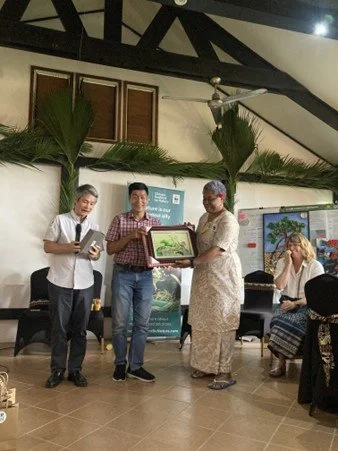
The workshop closed with an awards ceremony to recognise everyone’s hard work and achievements over the past four years of CRxN, and a delightful farewell song by the Fiji team. This was a happy, emotional and celebratory moment. And there wasn’t a dry eye in the house when Susan from Kyeema Foundation (PNG) bravely shared her story of how this project has changed her life.
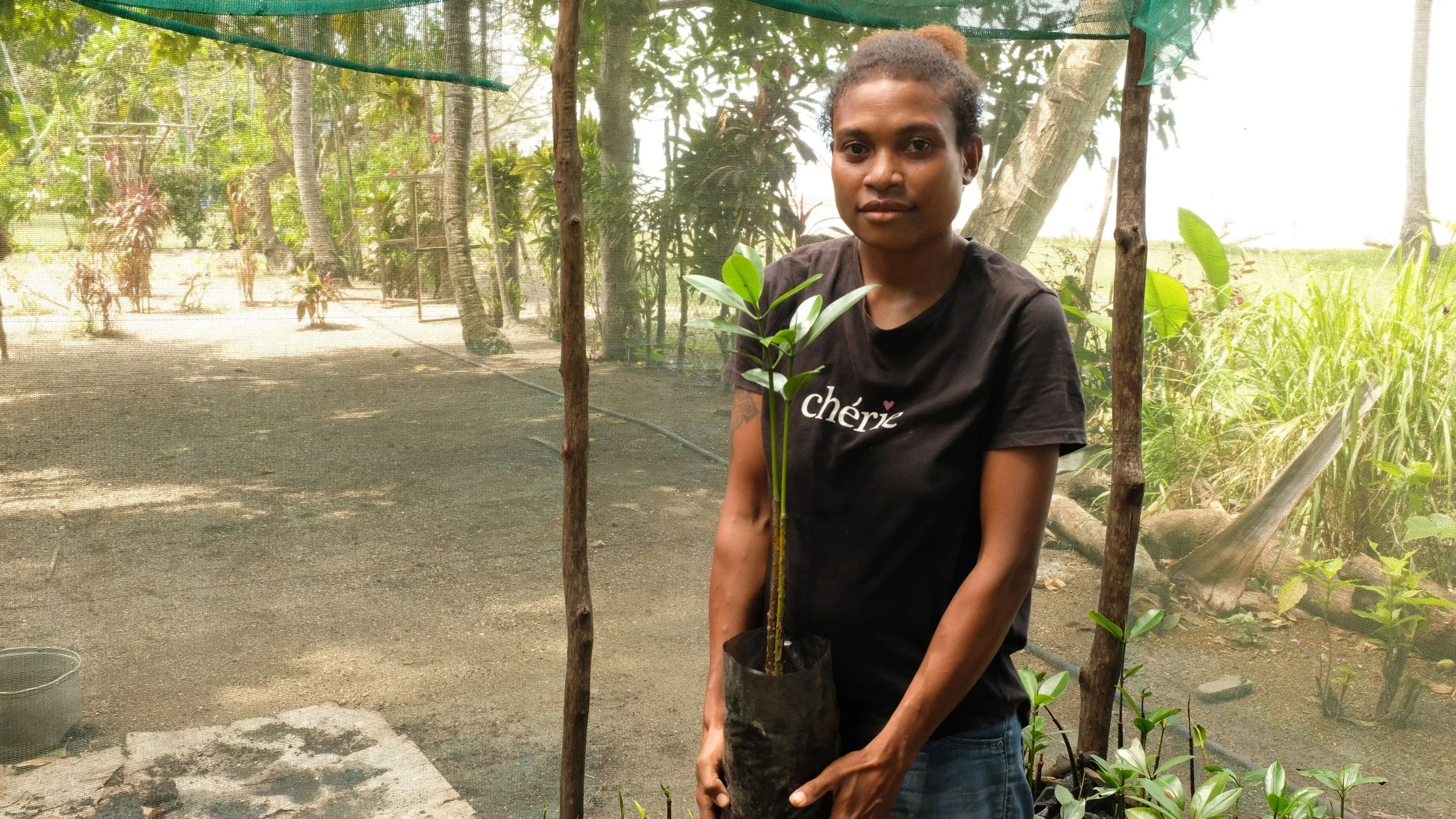
Susan in the mangrove nursery in her community ©Corals for Conservation / Lauren Hodgson
“The support from Kyeema and WWF has been life changing for me and for our community. It allows us to do something bigger than us. Our next generation will have more fish, our homes are protected from the ocean, we have food on the table and income from our chickens. The work we are doing is for the community, not ourselves, so people can respect and save our environment and our future.”
— Susan Aku, Kyeema Foundation
And I guess that’s what we’re all working towards – changing people’s live for the better by restoring nature and building climate resilience. As Program Manager, I am so proud of all the participants for engaging so enthusiastically in the workshop, with honesty, curiosity and passion. And ultimately for striving to make the world a better place through nature-based solutions – one mangrove, forest, wetland or coral reef at a time.
Thank you to all that participated, and those who made this event possible including but not limited to all CRxN Partners and event participants, Natural Accord Consulting and Talanoa Consulting (facilitation), University of Technology Sydney (CRxN Evaluation team), First Landing Resort in Fiji, and our hosts at WWF-Fiji.
Explore more