Mangrove restoration as a nature-based solution – a case study
In North Malaita and Makira, World Vision Solomon Islands implemented a Climate Resilient by Nature-supported project to restore mangrove and terrestrial lands.
In Sulagwalu, North Malaita the effects of climate change—such as erosion, rising sea levels, and declining biodiversity—are unfolding. Ben and his relatives, the custodians of this area, have witnessed these impacts firsthand and were motivated to address these challenges head on.
Ben began restoring mangroves along his village’s coastline approximately four years ago. Remarkably, Ben and his relatives did this with limited resources and without any support from other organisations or local government. However, to address some persistent challenges and expand his efforts, additional support and further knowledge about mangrove and ecosystem restoration were needed.
In 2023, World Vision, through the CRxN-funded project, began supporting Ben and his peers to take part in numerous trainings. This included the introduction of Farmer Managed Natural Regeneration (FMNR) techniques. FMNR is a low-cost land restoration technique involving the systematic regrowth and management of trees and shrubs in degraded areas.
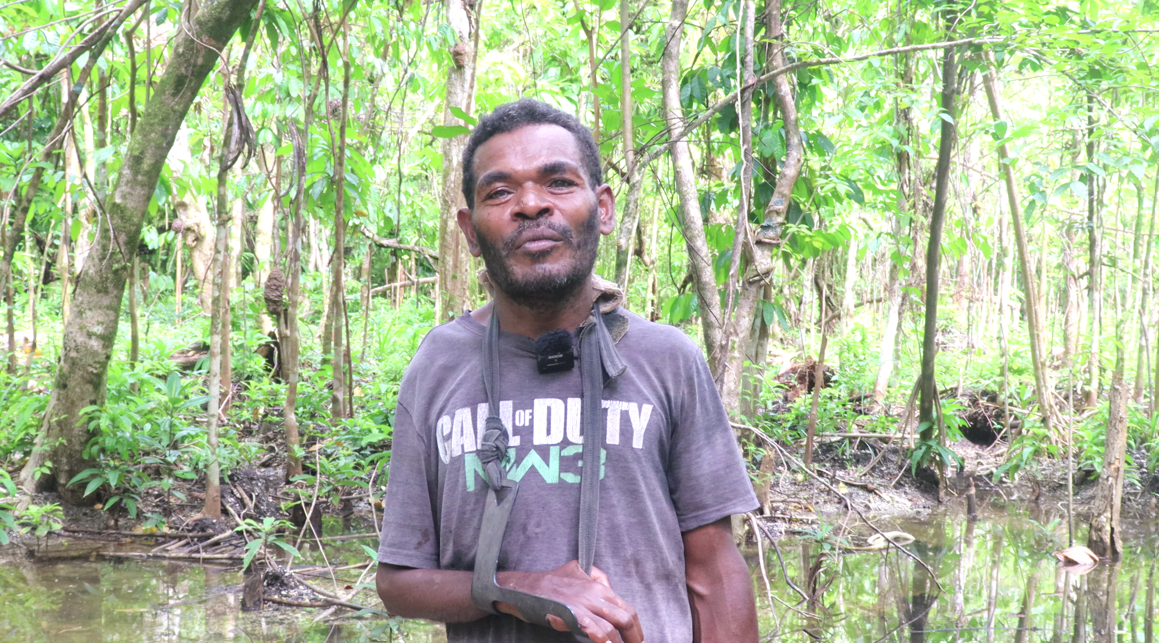

Ben ©World Vision (left) and his mangrove nursery ©WWF-Australia/Georgia Davis (right)
In addition, the project worked with communities to form and agree on bylaws that govern mangrove resource usage to prevent trespassers, as well as development and construction from encroaching on restoration area boundaries. This ensures the mangrove restoration area can continue to thrive.
Ben and his peers focused on two methods for mangrove restoration: Using seedlings from nurseries to restore mangrove areas as well as applying FMNR techniques to mangrove tree stumps support better regrowth.
Under Ben’s leadership, some of the key impacts experienced from this project include:
Improved mangrove health: Near‑zero mortality rates of newly planted mangroves during the report period represents an enormous improvement compared to numbers from before mid-2023. Regular night‑time monitoring, pest removal, and improved nursery methods directly contributed to this success.
Expansion of restored mangrove areas: Ben now manages four active restoration sites, covering approximately two hectares of coastline and wetlands. His team plants around 50 mangrove seedlings each month, using both direct planting and nursery transplanting methods.
Biodiversity recovery underway: Promising signs of recovery are emerging with community observations and field checks showing increased mud crab populations and more frequent fish movement within the mangrove areas.
Knowledge sharing and inclusive leadership: Ben is increasingly called upon by neighbouring communities to conduct mangrove demonstrations and speak at community events. “I now possess the confidence and skills to assist other vulnerable communities in engaging with nature-based solutions,” says Ben. “This is a proud moment for me, especially as a person living with a disability.”
Want to learn more about the achievements and lessons learned from these restoration efforts? Read the full case study—Empowering All: Disability no barrier to nature-based solutions and FMNR actions