Disability inclusion
Evidence, participatory research and practical tools to support practitioners to move from committment to action.
People with disabilities are disproportionately vulnerable to climate risks and environmental shocks, while often facing systemic barriers to participation in nature-based solutions (NbS), livelihoods and decision-making. Disability is frequently subsumed within GEDSI approaches and as a result, meaningful disability inclusion remains a significant gap in programming.
If nature-based solutions are to truly deliver equitable outcomes, disability-inclusive practice needs to be strengthened and intentionally embedded throughout the project cycle.
Introducing the learning program
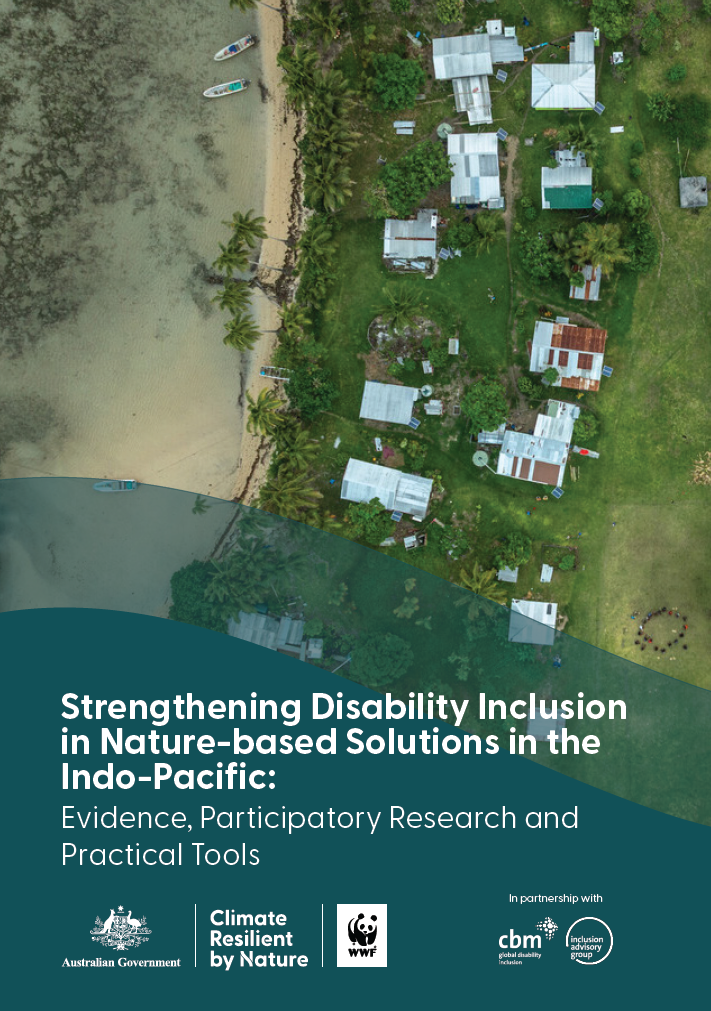
WWF-Australia and CBM Australia Inclusion Advisory Group have partnered together to deliver a Disability Inclusion Learning Program focused on strengthening understanding, evidence and practical application of disability-inclusive NbS. The learning program was designed to move beyond awareness-raising and generate practical lessons for WWF teams, partners, governments, Organisations of Persons with Disabilities (OPDs), and communities working across CRxN countries.
The publication is structured in three parts:
Part 1: presents the evidence base, literature review and participatory action research methodology.
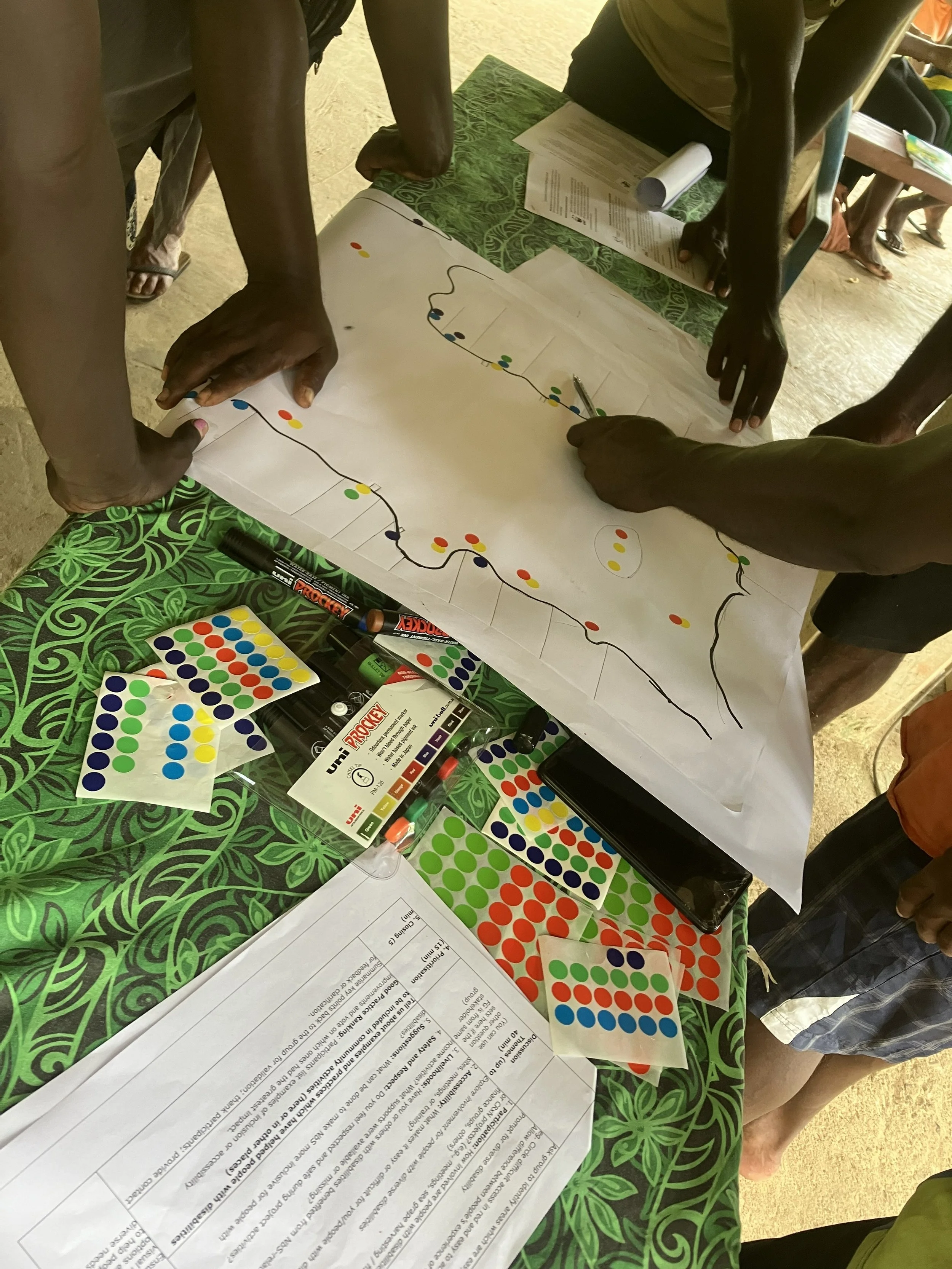
Part 2: shares findings from research undertaken in collaboration with the Disability Service Centre in Laos and the National Disability Forum Solomon Islands, highlighting opportunities and barriers related to participation, governance, accessibility and livelihoods.
Part 3: provides a Practitioner’s Guide with tools and templates to support the design, implementation, monitoring and adaptation of disability inclusive NbS initiatives.
The combined report can be accessed below in PDF, as well as Word for screen readers. The standalone Practitioner’s Guide (Part 3) can also be downloaded separately.
Key recommendations
Disability inclusion in Nature-based Solutions (NbS) is a systems issue, not simply an accessibility issue.
Meaningful inclusion depends on governance, livelihoods, services, attitudes, accountability and partnerships, as well as physical access. The research found that people with disabilities are participating in NbS activities, but barriers remain across decision-making, livelihoods, information access and institutional system
OPD partnerships are critical. Organisations of Persons with Disabilities as strategic partners strengthen inclusion, accessibility and accountability throughout the project cycle.
Accessibility works best when planned from the start. Inclusive design should be embedded in sites, communications and community engagement processes from the outset.
Promote equitable livelihood and benefit-sharing systems. NbS initiatives should adopt a value-chain perspective that addresses barriers and identifies opportunities for equitable participation across production, processing, marketing, governance and enterprise management functions.
Better data is needed to track progress. Disability inclusion must be integrated within monitoring and learning systems to understand participation, barriers and outcomes. Disability-disaggregated data as well as qualitative feedback from people with disabilities and OPDs is key.
Disability inclusion should be a core measure of quality. It strengthens the effectiveness, equity and sustainability of Nature-based Solutions
Invest in ongoing learning and capacity building: Continued research, testing practical tools and supporting peer learning will help strengthen disability-inclusive approaches across the Indo-Pacific.
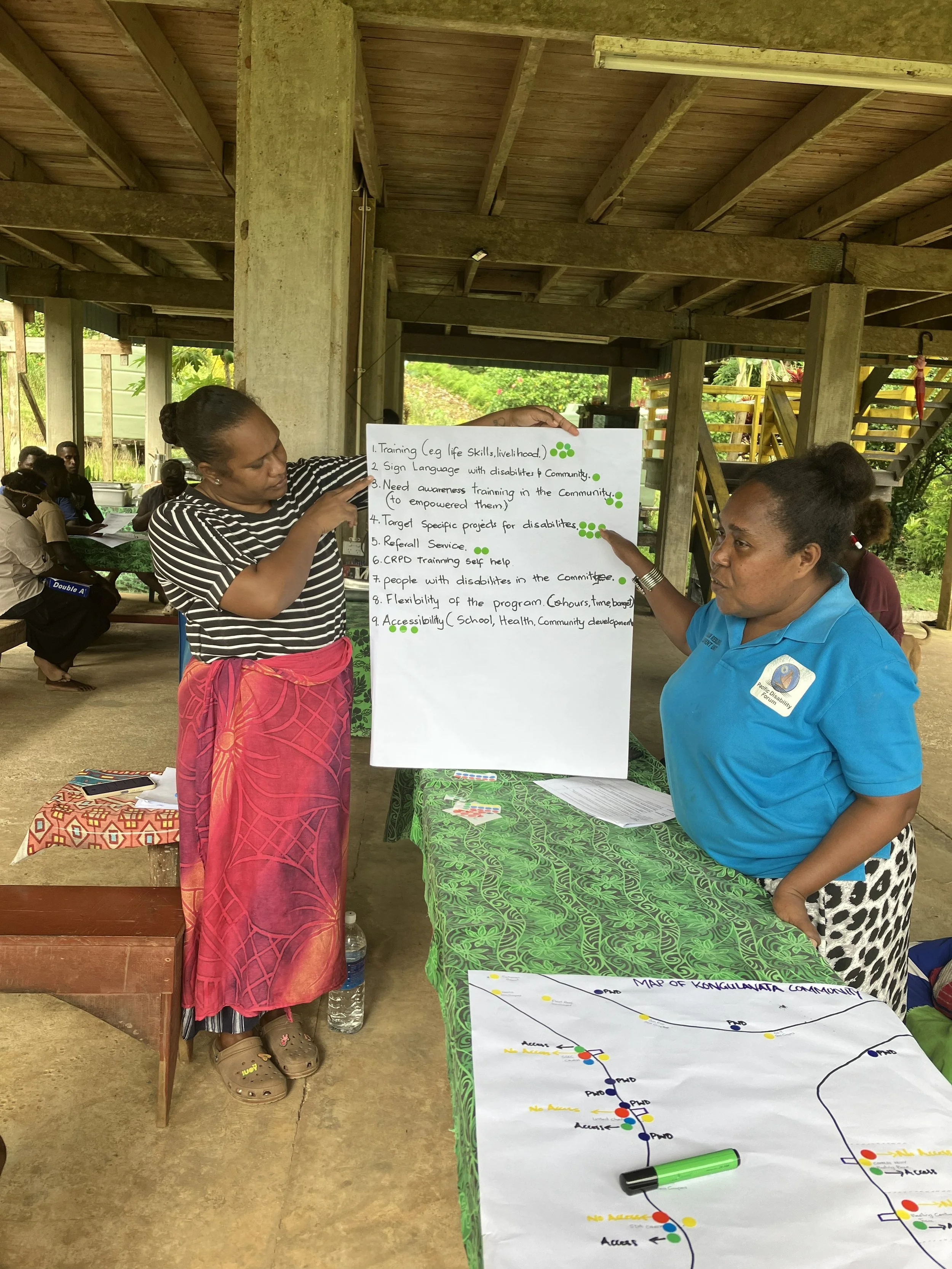
©CBM Australia/Ruth Bryce
From commitment to action
As part of this learning program, a webinar explored important considerations for embedding meaningful disability inclusion throughout the project cycle.